
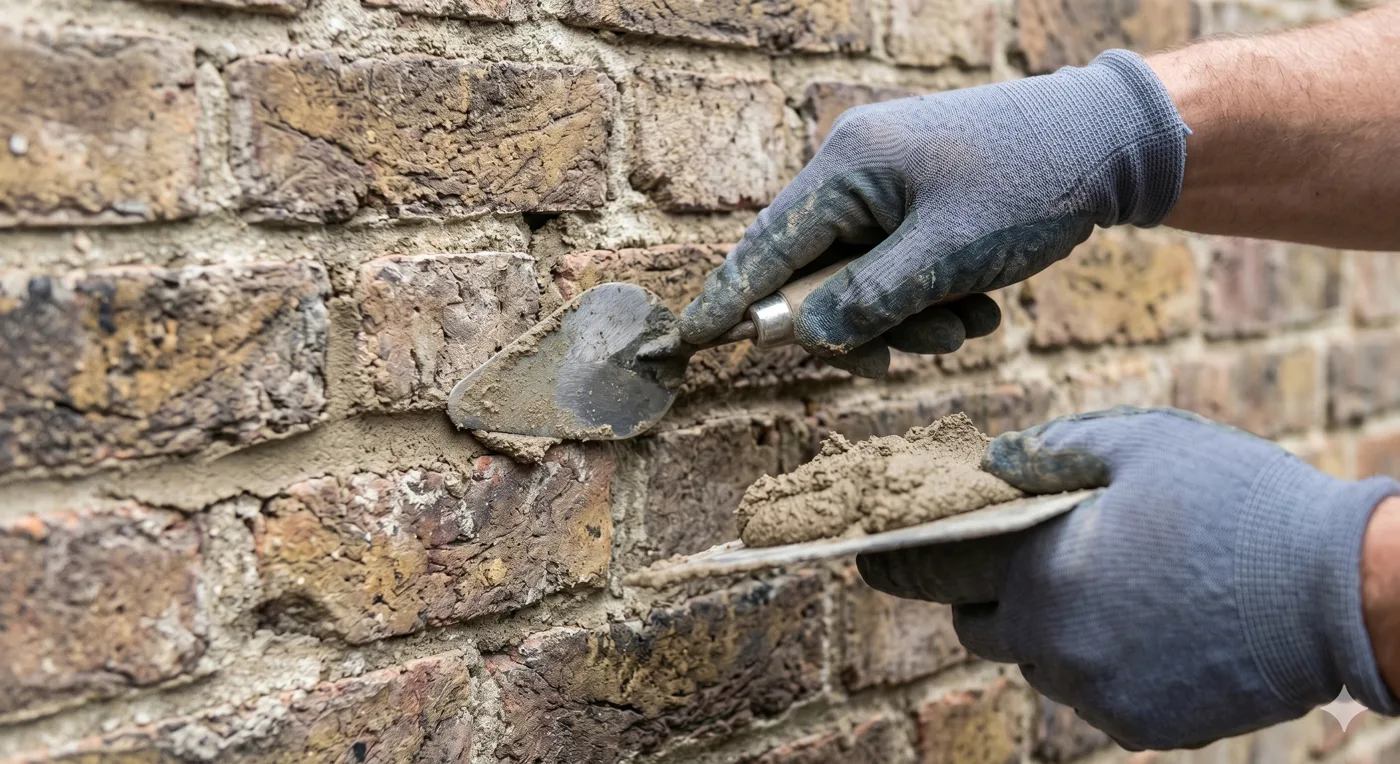
If chunks of brick are flaking, popping off, or crumbling on your house, you are looking at brick spalling — one of the most common masonry problems on Connecticut homes. The question most homeowners have is the same: is it serious, and what causes it?
What Is Brick Spalling?
Spalling is the term for brick faces breaking off, popping out, or crumbling. The outer "skin" of the brick — which is harder and more weather-resistant than the inner core — comes off in chunks, exposing softer interior brick that deteriorates much faster. Spalling almost always starts at corners, edges, or the top of walls where water exposure is highest.
What Causes Brick to Flake?
Spalling is a symptom, not a disease. The disease is almost always trapped moisture combined with freeze-thaw cycles. Here is what is typically happening:
- Water gets behind or into the brick — through failed mortar joints, missing flashing, blocked drainage, or improper sealing.
- That water sits in the porous brick during cold weather.
- When temperatures drop below freezing, the water expands ~9% as it turns to ice.
- That expansion happens inside the brick, breaking the brick apart from the inside.
- Connecticut's freeze-thaw cycling — temperatures swinging through freezing repeatedly during winter — multiplies this damage.
The Most Common Underlying Causes
- Failed mortar joints letting water into the wall. The most common cause and one repointing fixes.
- Hard Portland cement mortar on soft historic brick. A common error in past repair work — modern mortar that is too hard for older brick forces the brick to take all freeze-thaw stress.
- Sealed brick that traps interior moisture. Old brick walls need to breathe. Sealing them traps moisture inside the wall, where it freezes and expands.
- Splash zones at grade level. The bottom courses of a wall get repeatedly soaked from rain bouncing off the ground.
- Failing flashing letting water behind the brick. Common above windows, doors, and at parapet walls.
How Bad Is Spalling?
It depends on how far it has progressed:
- Early stage (a few isolated flaked bricks): not urgent, but time to investigate the cause.
- Mid stage (multiple bricks affected, surrounding mortar deteriorating): time to repair before the affected area expands.
- Late stage (significant brick loss, structural concerns): urgent — continued deterioration risks structural problems and water infiltration into the home.
Why Patching Does Not Fix Spalling
One of the most common mistakes homeowners make is filling spalled brick faces with mortar or epoxy without addressing the underlying water issue. Within one or two winters, the patch fails — because the cause was never fixed. Real spalling repair starts with diagnosis: why is water getting to that brick?
When to Call a Professional
If you are seeing more than a few isolated flaked bricks, or if the spalling is on a chimney, foundation, or load-bearing wall, professional assessment is important. The brick repair itself is straightforward — but only after the underlying cause is identified and resolved.
Our team in Connecticut diagnoses the cause first, then provides a written estimate covering both the cause-resolution and the brick repair. View our full brick repair services →
Need Brick Repair?
We diagnose and repair brick spalling across Connecticut. Free written estimates after a site visit.
Get a Brick Repair Estimate