
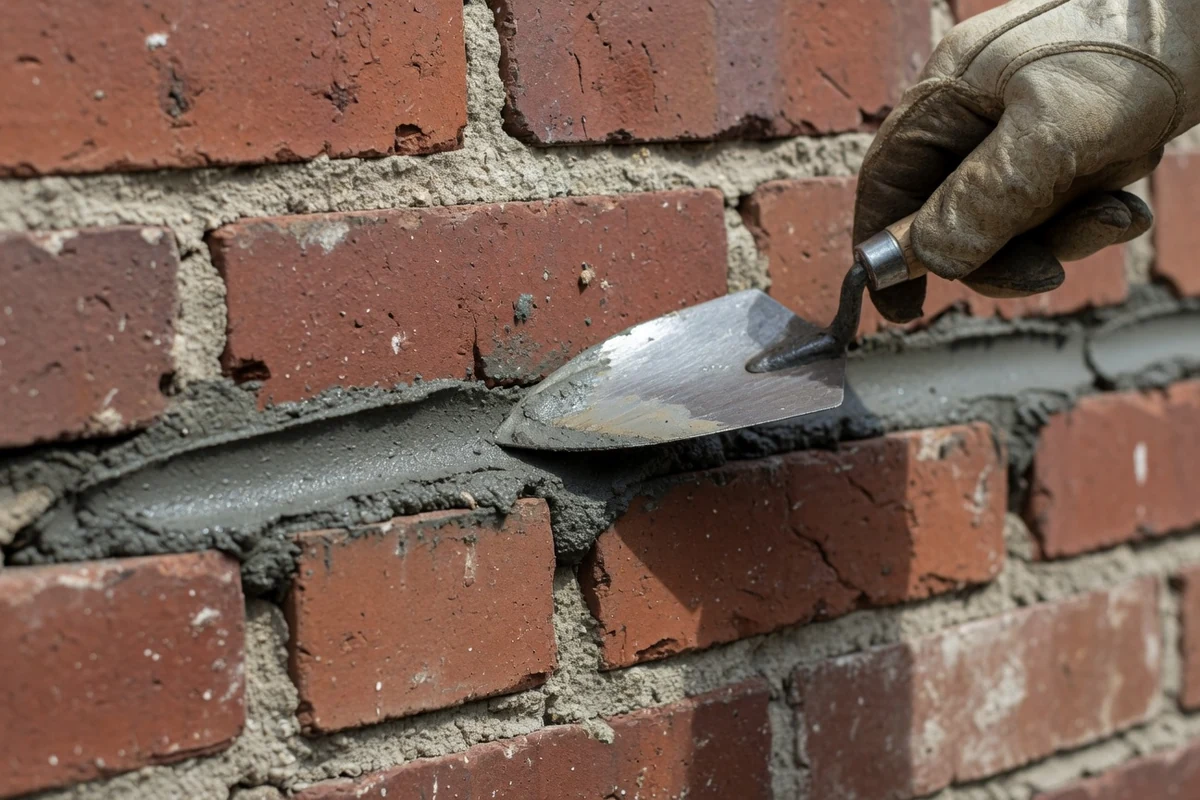
Brick repointing cost in Connecticut varies dramatically from project to project. The same homeowner might get one estimate for a chimney repointing and a different estimate for a foundation repointing — and a vague online "average" tells you almost nothing about either job. The variables that drive cost are well understood, though, and once you know them you can evaluate any estimate honestly.
What Drives the Cost?
1. Square Footage / Linear Footage
The biggest single factor. A larger area costs more — with some economies of scale once a crew is on-site. Get a written measurement from any contractor you are considering. Vague "the wall" pricing is a red flag.
2. Joint Width and Brick Size
Wider joints mean more mortar, more time per square foot, and higher cost. Modern bricks with thin joints repoint faster than old bricks with wider joints. Stone walls with irregular joint widths take longer than brick walls with uniform joints.
3. Access Requirements
A wall at ground level you can reach with a ladder costs significantly less than one requiring scaffolding, a lift, or roof anchors. Chimney work above the roofline often requires a roofing harness setup. Parapet repointing on a multi-story building requires scaffolding or lift rental that can equal the labor cost.
4. Mortar Specification
Standard Type N or Type S mortar is least expensive. Lime-compatible mortar for historic work costs more. Custom-mixed mortars to match a specific historic color or texture cost more still. Using the wrong mortar on an older home does serious long-term damage, so paying for the right mortar matters.
5. Extent of Failure
Repointing entire walls (every joint) costs more than spot repointing (only failed sections). Some homeowners want full repointing for visual consistency; others want spot repair to address specific failures. Both are valid approaches, and the right one depends on the wall.
6. Required Adjacent Work
Often repointing reveals brick that needs replacement, flashing that needs repair, or coping stones that need resetting. Honest contractors note these in the estimate so you are not surprised mid-project.
7. Geography
Pricing varies somewhat across Connecticut. Greater Hartford and New Haven pricing is generally consistent. Fairfield County tends to run higher; eastern Connecticut tends to run a bit lower.
Why You Cannot Get an Accurate Quote Online
Repointing pricing is highly site-specific. Two homes with the same square footage of brick can have very different costs based on access, mortar matching requirements, and the extent of underlying issues. Any reputable contractor will need a site visit before providing a written estimate. Be skeptical of "instant quotes" that have not seen the wall.
How to Evaluate Repointing Estimates
When you get an estimate, ask specifically about:
- Joint preparation depth. Joints need to be cut to 2-2.5x the joint width before repointing — typically 3/4" to 1" deep. Shallow cuts are a quality red flag.
- Mortar formulation. Lime-compatible for pre-1930 buildings, Type N or Type S for newer work. The contractor should be able to tell you which they will use and why.
- Tooling profile. Concave, V-shape, flush, or struck — should match the original. Tooling is what compresses the mortar surface and makes it weather-resistant.
- Cleanup and protection. How will they protect plantings, walks, and adjacent surfaces? When will they clean up?
- Warranty. Quality repointing should be warranted for several years. Unwarranted work is a red flag.
Cost vs. Cost of Not Doing It
Repointing on time is one of the most cost-effective masonry investments you can make. Ignoring failed mortar joints leads to:
- Brick spalling — significantly more expensive to repair than the original repointing would have been.
- Water infiltration into the home — leading to interior moisture, mold, and finish damage.
- Foundation moisture issues — water reaching the foundation through failed wall mortar.
- Structural rebuilds — if deferred long enough, the entire wall needs rebuilding rather than just repointing.
When to Call a Professional
If you have a brick wall, chimney, or foundation showing signs of failed mortar, get at least one written estimate before deferring the work. Repointing on time is significantly less expensive than the brick replacement and structural rebuilds that result from deferred maintenance. We provide free written estimates on all repointing work in Connecticut. Learn about our repointing service →
Get a Free Written Repointing Estimate
Site visits are free. Written estimates are detailed and honest. No high-pressure sales.
Schedule an Estimate