
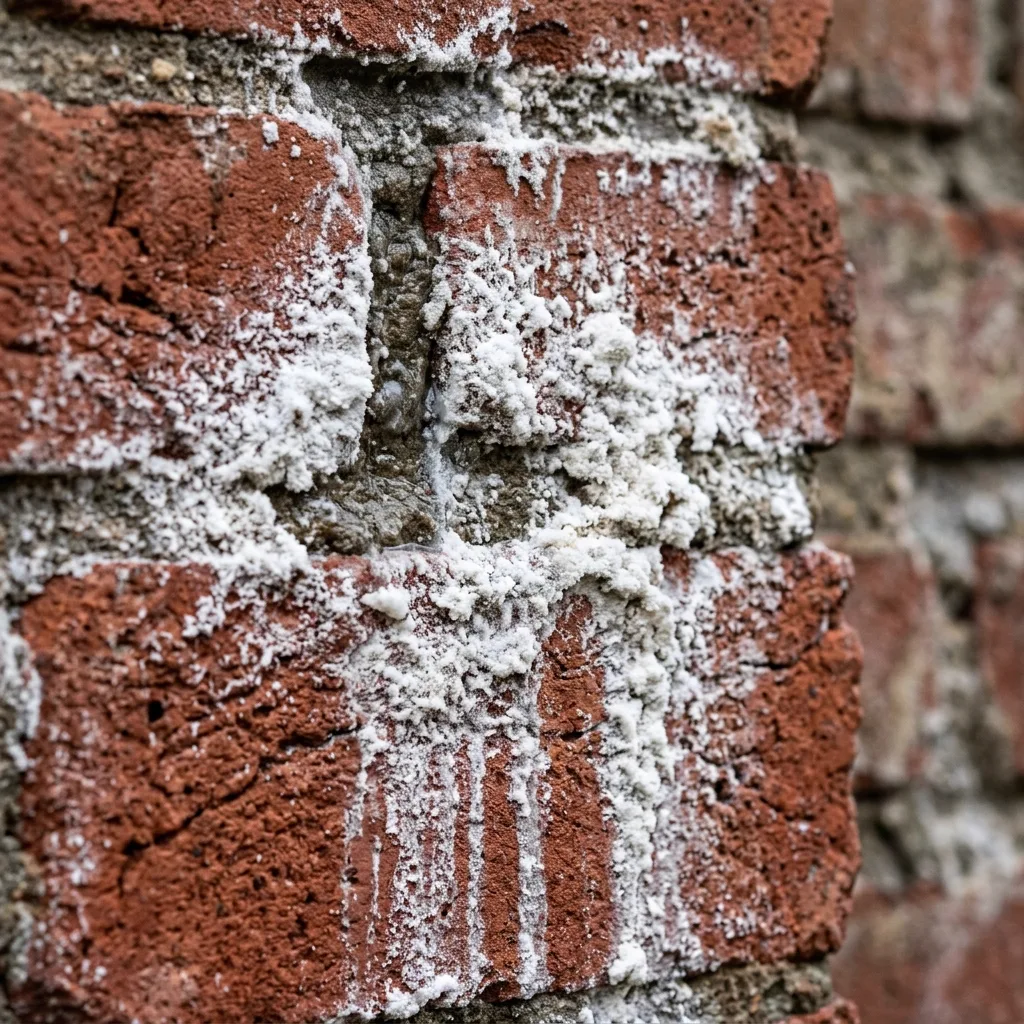
You walked outside and noticed a chalky white film or powdery deposit on your brick wall, chimney, or retaining wall. That powder is called efflorescence, and it tells you something important is happening inside the masonry.
What Is Efflorescence?
Efflorescence is a deposit of water-soluble salts (usually calcium hydroxide, calcium carbonate, sodium sulfate, or potassium sulfate) that get carried to the surface of brick or concrete by water moving through the masonry. When the water reaches the surface and evaporates, the salts are left behind as a white crystalline residue.
The presence of efflorescence is a reliable indicator that water is actively moving through your masonry. The water itself is the issue, not the white deposit.
Where Do the Salts Come From?
- The brick or concrete itself — most masonry materials contain small amounts of soluble salts that water can dissolve.
- The mortar — particularly Portland cement mortar, which contains calcium hydroxide.
- The soil behind retaining walls — soil salts dissolve in groundwater and migrate through the wall.
- De-icing salts — road or sidewalk salts can wick up into masonry from below.
What Causes Efflorescence?
Three things must all be present:
- Soluble salts in the masonry materials.
- Water to dissolve those salts.
- A path for the water to travel to the surface and evaporate.
If any one of these is missing, no efflorescence appears. The water source is usually the actionable one — fix the water infiltration and efflorescence stops.
Common Sources of Water Infiltration
- Failed mortar joints letting rain into the wall.
- Cracked or missing flashing above windows or at the roofline.
- Missing or blocked weep holes on cavity walls.
- Failing chimney crown letting rain into the chimney.
- Inadequate or absent drainage behind retaining walls.
- Splash exposure at grade level on the lowest courses of brick.
Is Efflorescence Damaging?
The white deposit itself is mostly cosmetic — annoying, but not structurally dangerous. The water that caused it, however, is doing real damage. The same water that carries salts to the surface is also:
- Saturating the masonry (causing freeze-thaw spalling in winter).
- Carrying soluble materials out of the mortar (weakening the binder).
- Potentially reaching the interior of the building (causing damp walls, mold, or basement moisture).
How to Address Efflorescence
The right approach is two steps:
- Find and fix the water infiltration. This is the only way to permanently stop efflorescence. Repointing failed mortar, replacing failing flashing, fixing crown cracks, or adding drainage behind a retaining wall.
- Clean the existing efflorescence. After the source is fixed, the surface deposits can be cleaned with a stiff brush, low-pressure water, or a specialized efflorescence cleaner. Do NOT use muriatic acid on its own without knowing what you are doing — it can damage some bricks and stones.
Why Sealing Will Not Fix Efflorescence
A common mistake: applying a brick sealer to "stop" efflorescence. This usually makes the problem worse, not better. The sealer traps moisture and salts inside the wall — eventually they push outward forcefully, often blowing off the face of the brick (spalling). The right fix is stopping the water at its source, not trapping it.
When to Call a Professional
If you have persistent efflorescence — particularly if it keeps returning after cleaning, or if it is appearing on a chimney, parapet, or below an upper-floor window — the underlying water infiltration needs to be diagnosed and resolved professionally. The longer the water keeps moving through the masonry, the more damage accumulates.
Our team in Connecticut diagnoses water infiltration paths and provides written estimates for the repointing or repair work needed. View our tuckpointing and repointing services →
Persistent Efflorescence? Get an Assessment.
If white deposits keep returning after cleaning, water is actively moving through your masonry. We diagnose and repair the underlying cause.
Schedule a Site Assessment