
Brick Repair & Spalling Repair in Connecticut
Innovative Masonry & Restoration
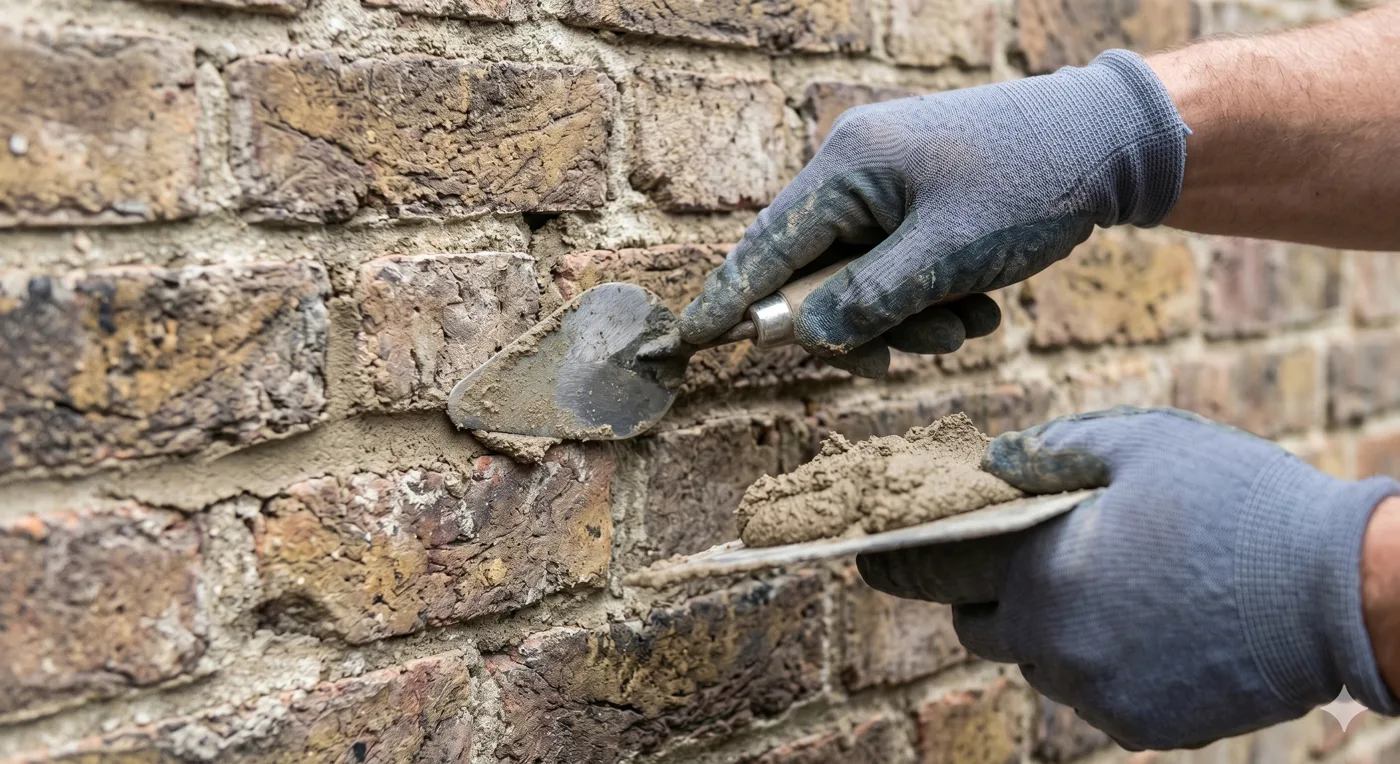
If you're seeing chunks of brick face popping off your home, crumbling brick at the corners of your foundation, or cracks running through your brick walls — you're seeing some of the most common masonry problems in Connecticut. The good news: most brick damage is repairable when caught at the right stage. The challenge is doing it right so the repair actually lasts.
Innovative Masonry & Restoration provides expert brick repair and spalling repair across Fairfield, New Haven, Hartford, Middlesex and Litchfield Counties. We assess the cause first, then fix it — not the other way around.
What Is Brick Spalling?
Spalling is the term for brick faces breaking off, popping out, or crumbling. It almost always starts at corners, edges, or the top of a wall where water exposure is highest. Once the protective outer face of the brick is gone, deterioration accelerates — the inner brick is softer and more porous, so it absorbs more water and spalls faster.
Spalling is a symptom, not a cause. The cause is almost always trapped moisture combined with freeze-thaw cycles. Connecticut winters are particularly hard on brick because of the repeated freeze-thaw transitions during mid-winter.
Why Brick Spalls — and Why Patching Doesn't Fix It
- Failed mortar joints letting water into the wall: The most common cause — and one repointing fixes.
- Hard Portland cement mortar on soft historic brick: The mortar won't compress, so the brick takes all the freeze-thaw stress and breaks.
- Sealed brick that traps interior moisture: Sealing brick that should breathe forces moisture to leave through the brick face, blowing it off in chunks.
- Splash zones at grade level: The bottom courses of a wall get repeatedly wet from rain bouncing off the ground.
- Failing flashing letting water behind the brick: Common above windows, doors, and at parapet walls.
The reason simple patching often fails: if you replace a spalled brick without addressing the underlying water issue, the new brick will spall too. Real brick repair starts with understanding why the brick failed.
Our Brick Repair Process
1. Diagnosis
We inspect the affected area, check mortar condition, look at flashing details, examine drainage and grading, and test for moisture infiltration paths. The goal is to find the cause before fixing the symptom.
2. Cause Resolution
If failed mortar is the cause, we repoint the affected area first. If flashing is failing, we address that. If the wrong mortar was used in a past repair, we cut it out and use the correct mortar this time.
3. Brick Replacement
Spalled or seriously damaged bricks are removed by cutting out the surrounding mortar and gently extracting the brick. New bricks (matched as closely as possible to the existing wall) are toothed in with proper bonding to the surrounding courses, and joints are mortared and tooled to match.
4. Sealing — Only When Appropriate
We do NOT seal brick by default. Most older brick walls need to breathe, and sealing them causes more spalling, not less. When sealing IS appropriate (specific veneer types, certain modern cavity-wall constructions), we use a vapor-permeable siloxane that allows moisture vapor to escape while blocking liquid water.
Brick Wall Repair
Damaged sections of brick wall — whether on a foundation, garden wall, or building exterior — can usually be selectively rebuilt while preserving the surrounding masonry. We rebuild collapsed sections, replace damaged courses, and repoint compromised areas. For walls with structural movement (cracking, bulging, leaning), we assess for foundation issues before recommending repair.
Brick Step Repair
Brick steps take heavy abuse — freeze-thaw, salt, foot traffic — and frequently need repair on older Connecticut homes. We rebuild damaged step treads and risers, repoint failed mortar between bricks, and address structural settling that causes step movement.
Brick Foundation Repair
Brick foundations need careful, knowledgeable repair. We repoint failed mortar, replace damaged bricks individually, and address moisture infiltration at the base of the wall. We don't do full foundation replacements — our focus is preservation and skilled repair of what's there.
Why Choose Innovative Masonry for Brick Repair
- Cause-First Approach: We diagnose the underlying cause before quoting a repair, so the fix lasts.
- Matched Materials: Brick, mortar, and tooling matched to the existing wall.
- Lime-Compatible for Historic Brick: Soft historic brick gets lime-compatible mortar, not hard Portland cement.
- Honest Assessments: If a small repair will solve the problem, that's what we recommend.
Service Area
Brick repair services across Fairfield, New Haven, Hartford, Middlesex and Litchfield Counties, Connecticut — including New Haven, Hamden, Branford, Hartford, West Hartford, Middletown, Cheshire, Wallingford, Waterbury, Meriden, and surrounding areas.
Frequently Asked Questions
How much does brick spalling repair cost?
Brick repair cost depends on several factors: how many bricks need replacement, whether matching brick is readily available or needs to be sourced from salvage, how much repointing is needed alongside the replacement, access requirements (ladder versus scaffolding), and whether the underlying cause requires additional work to address. Spot repairs of a few bricks are obviously much less involved than wall-scale spalling repair. We provide free written estimates after a site visit so the cost reflects what is actually needed for your specific situation.
Can spalled brick be saved or does it always need replacement?
Once a brick has spalled past its outer face, the brick itself is structurally compromised and should be replaced — patching with mortar typically fails within a year or two. Bricks that are only minimally face-damaged with no cracks can sometimes be left in place after the underlying cause is fixed.
Is sealing my brick a good idea?
Usually no — and often it makes spalling worse. Most older brick walls need to breathe; sealing forces moisture to evaporate through the brick face, blowing it off. Sealing is appropriate only for specific situations and requires a vapor-permeable siloxane sealer, not a film-forming sealer. Get a professional opinion before sealing any brick wall.
Why is my brick crumbling at the bottom of the wall?
Bottom courses suffer from splash exposure (rain bouncing up from grade), salt exposure from snow treatment, and ground moisture wicking up through the foundation. Common fixes include grade modification, splash protection, and replacing the affected courses with frost-resistant brick.
Can you match the color of my old brick?
Usually yes — for most common Connecticut brick types we can match closely from current production. For historic or unusual brick, we sometimes source reclaimed brick from salvage yards. Perfect color match isn't always possible with weathered brick, but we get as close as the available materials allow and place new bricks where they're least visible when needed.
How long does brick repair last?
Brick replacement combined with proper repointing typically lasts 25-30+ years before any further attention is needed. The key is addressing the original cause. Repairs that just replace damaged brick without fixing the water infiltration that caused the damage usually fail within a few years.
Can you replace just one cracked brick in my wall?
Yes — selective brick replacement of one or several damaged bricks is a common repair. We carefully cut out the failed mortar around the damaged brick, extract it without damaging neighbors, and tooth in a matching replacement with proper mortar. Single-brick replacement is a relatively quick repair when access is straightforward. We always assess why that brick failed before replacing — if the cause is an ongoing water issue, the new brick will fail too.
Can you fix my brick mailbox after a car hit it?
Yes — vehicle-damaged brick mailboxes are a common repair. Depending on damage severity, options range from rebuilding the affected section (if footings are intact) to a full rebuild from the footing up. Insurance typically covers this kind of damage. We can document the damage with photos for your insurance claim, then rebuild to match the original — or as a redesign if you want to upgrade the look.
Can you replace a rusted lintel above my garage door?
Yes — rusted steel lintels above garage doors and large windows are a common cause of cracked brick (rust expansion is called 'rust jacking' and breaks the brick from the inside). We remove the affected brick courses, replace the rusted lintel with a properly-sized new steel lintel with appropriate corrosion protection, and rebuild the brick with matching material. This is a structural repair that should not be deferred — failed lintels can lead to brick falling or larger sections of wall failing.
Local Service Areas
We work directly with homeowners and property owners in cities across our service area. For service-specific information by location:
Get a Brick Repair Estimate