
Tuckpointing & Repointing in Connecticut
Innovative Masonry & Restoration
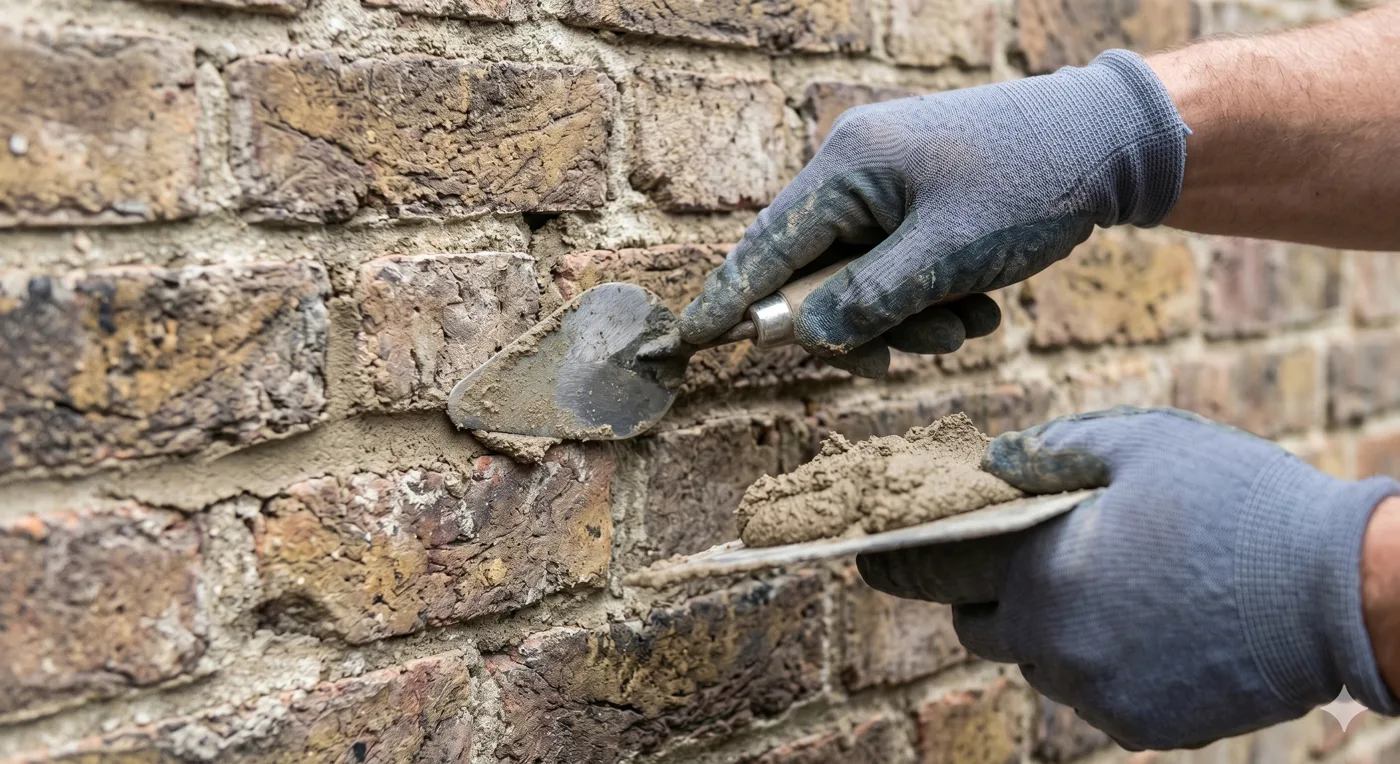
Failing mortar joints are the single most common reason older Connecticut brick and stone buildings start having serious problems. The good news: catching mortar deterioration early — and addressing it with proper tuckpointing and repointing — is one of the most cost-effective masonry repairs you can make. The bad news: doing it wrong is worse than not doing it at all.
Innovative Masonry & Restoration provides professional tuckpointing and repointing services for homes, historic buildings, and small commercial properties across Fairfield, New Haven, Hartford, Middlesex and Litchfield Counties, Connecticut.
What's the Difference Between Tuckpointing and Repointing?
The terms are often used interchangeably, but technically they're different. Repointing is the process of removing failed or deteriorating mortar from the joints between bricks or stones and replacing it with fresh mortar. Tuckpointing is a decorative variant where two contrasting mortar colors are used to create the appearance of very fine joints — common on historic buildings.
For most homeowners, what they need is repointing. We use the term tuckpointing too because that's what most people search for, but on the technical side, we'll always specify which approach is appropriate for your masonry.
How to Tell If Your Mortar Needs Attention
- Sandy or powdery joints: If you can scrape mortar out of the joint with a screwdriver — or just by running your finger across it — the binder has failed.
- Visible gaps or cracks in mortar lines: Vertical cracks, missing chunks, or horizontal separations all mean water is getting in.
- Loose or shifted bricks: When mortar fails enough, individual bricks lose their bond and start to move.
- Efflorescence (white staining) on the wall: A reliable sign of active water movement through the masonry.
- Damp interior walls or basement walls: Failed pointing on the exterior often shows up as moisture inside.
Our Repointing Process
1. Assessment and Mortar Matching
We inspect the masonry, identify failed sections, and analyze the existing mortar. For older homes — particularly anything pre-1930 — we use lime-based mortars compatible with the original. Modern Portland cement is too hard for old brick and will cause the brick face to spall instead of letting the mortar absorb movement.
2. Removing the Old Mortar
Failed mortar is removed to a depth of at least 2–2.5x the joint width — typically 3/4" to 1" — using hand tools and small grinders. Cutting too shallow leaves a weak repair; cutting too deep risks damaging the brick. The joint is then cleaned with brushes and water to remove all dust and loose material.
3. Packing the New Mortar
Fresh mortar is packed into the joint in layers, each pressed firmly with a tuck pointer to eliminate voids. Filling in one pass leaves air pockets that fail within a few seasons.
4. Tooling the Joints
Once the mortar has firmed up to a thumbprint hardness, the joints are tooled — using a concave jointer, V-jointer, or flat-tooled finish depending on what matches the original. Proper tooling compresses the mortar surface, making it more weather-resistant and giving the wall a clean, finished appearance.
Where Repointing Matters Most
- Chimneys — exposed on all sides, the first part of most homes to need repointing.
- Foundation walls — both fieldstone and brick foundations need periodic repointing as original mortar fails.
- Brick facades — particularly south-facing walls that get the most weather exposure.
- Parapet walls — top of a building, exposed to weather on three sides; fails fastest.
- Stone walls — mortared garden walls, retaining walls, and historic stone walls.
Why Choose Innovative Masonry for Repointing
- Mortar-Matched Repairs: We match color, texture, and joint profile to the original masonry — not a generic gray cement.
- Lime-Compatible for Historic Work: We use the right mortar for older buildings, not modern Portland that damages historic brick.
- Proper Joint Preparation: Joints cut to correct depth, cleaned thoroughly, and packed in proper layers.
- 20+ Years of Connecticut Experience: Mortar formulations and techniques tuned for our freeze-thaw climate.
Service Area
Innovative Masonry & Restoration provides tuckpointing and repointing services to homeowners and building owners throughout Fairfield, New Haven, Hartford, Middlesex and Litchfield Counties, Connecticut — including New Haven, Hamden, Branford, Hartford, West Hartford, Middletown, Cheshire, Wallingford, Waterbury, and surrounding towns.
Frequently Asked Questions
How long does tuckpointing last?
Properly done tuckpointing on a residential masonry wall typically lasts 25-30 years before another round is needed. Chimneys and parapets — more exposed — may need attention sooner, often 15-20 years. Quality of the original work and Connecticut's freeze-thaw exposure are the biggest variables.
How much does it cost to repoint a brick wall?
Repointing cost depends on several factors: the area being repointed, joint width and condition, brick versus stone, the mortar type required (lime-compatible for historic versus standard for newer construction), access (ladder versus scaffolding versus lift), and whether brick replacement is needed alongside the repointing. Two homes with similar square footage can have very different costs based on these factors. We provide free written estimates after a site visit, so the number you get reflects your actual project — not a generic range.
Can I just patch the bad spots myself?
Spot patching with the wrong mortar — particularly modern hardware-store mortar on an older home — can cause more damage than no repair at all. The hard mortar prevents the wall from flexing and forces moisture to evaporate through the brick face, causing spalling. If you have an older brick or stone home, we strongly recommend a professional assessment before any DIY mortar work.
What's the difference between tuckpointing and repointing?
Repointing is the structural repair — removing failed mortar and replacing it with fresh mortar. Tuckpointing is technically a decorative finish where two contrasting mortar colors create the appearance of very fine joints, common on Victorian-era buildings. Most homeowners use 'tuckpointing' to mean both.
Will the new mortar match my old brick?
Yes — when done properly. We analyze the existing mortar's color, texture, and aggregate, and either match it from a manufacturer or custom-mix to match. We also tool the joints to match the original profile (concave, V-shape, flush, etc.) so the repair blends rather than standing out.
How do I know if my mortar is lime-based or Portland cement?
Generally: brick or stone masonry built before 1930 used lime-based mortars; later construction is mostly Portland cement. We can confirm during the assessment with a simple acid test or by examining the mortar texture and color. Using the wrong mortar type on an old building causes serious long-term damage.
Local Service Areas
We work directly with homeowners and property owners in cities across our service area. For service-specific information by location:
Get a Repointing Estimate