Stone Veneer Installation in Connecticut
Innovative Masonry & Restoration
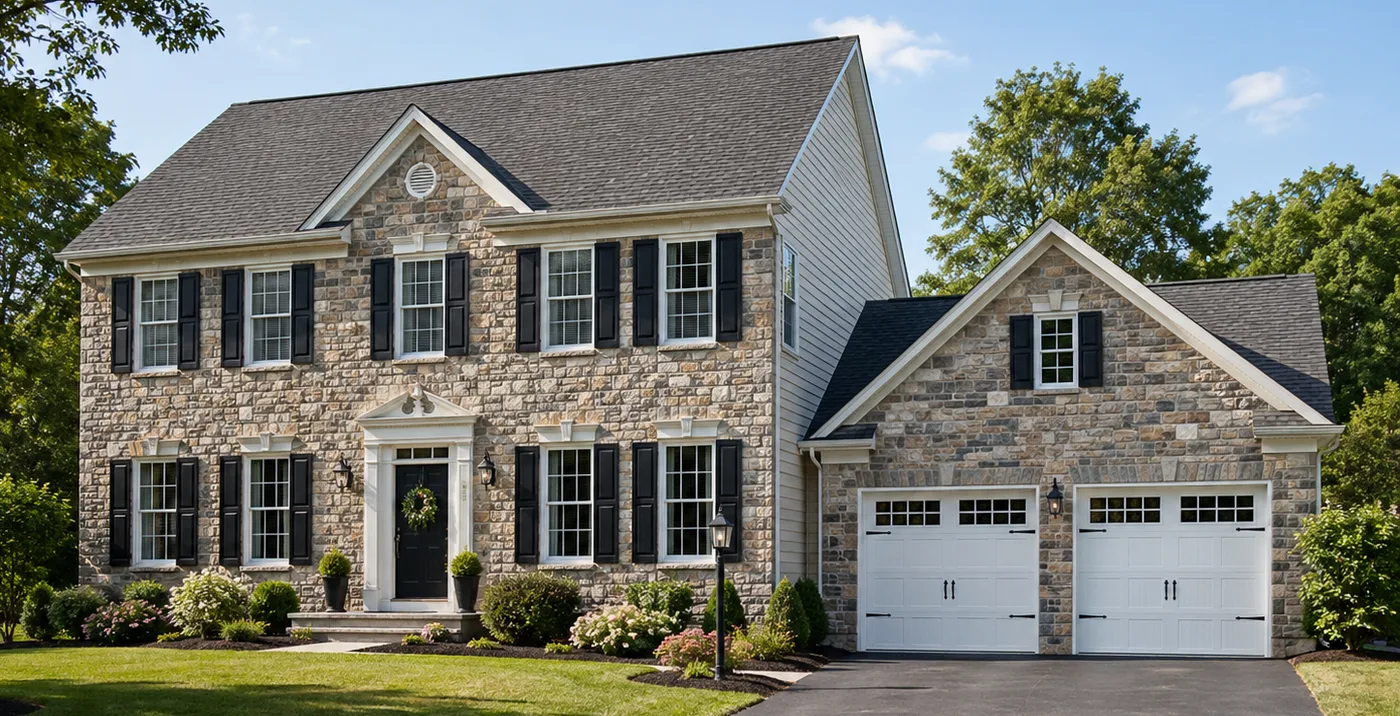
Stone veneer transforms the appearance of a home faster and at lower cost than any other exterior upgrade. Replacing dated brick, vinyl, or stucco accents with natural stone or quality manufactured stone changes a home's curb appeal — and its value — dramatically. The challenge is doing it correctly so the veneer doesn't fail, leak, or fall off the wall a few years after installation.
Innovative Masonry & Restoration installs natural stone veneer and manufactured stone veneer (also called cultured stone) on homes across Fairfield, New Haven, Hartford, Middlesex and Litchfield Counties.
Natural Stone vs Manufactured Stone Veneer
Natural Stone Veneer
Real stone — typically thin-cut at 1"-1.5" thick — installed with mortar to a wall surface. Highest visual quality, unique color and texture variation, and the most durable option. Natural stone is more expensive but doesn't have the color-fading issues of manufactured stone. Common types: ledgestone, fieldstone, quartzite, limestone.
Manufactured Stone Veneer (Cultured Stone)
Concrete-based products molded and colored to look like natural stone. Brands include Eldorado Stone, Boral Cultured Stone, ProVia, and Coronado. About 30-50% the cost of natural stone, lighter weight, and easier to install. Good quality manufactured stone can be very convincing visually, but the color is in the surface — it can fade over decades and shows damage more than natural stone does.
For most homeowners, the right choice depends on budget and how long they plan to own the home. Natural stone is the long-term investment; quality manufactured stone is the cost-effective choice that still looks great.
Common Veneer Applications
- Whole-house veneer — replacing existing siding with stone across the full exterior.
- Wainscot veneer — stone on the lower half of the exterior, traditional siding above. Most popular and most cost-effective dramatic upgrade.
- Accent walls — stone on prominent walls (front entry, gable ends) with siding elsewhere.
- Foundation veneer — covering exposed concrete foundation walls with stone, dramatically improving curb appeal.
- Chimney veneer — applying stone to existing chimneys for a more substantial appearance.
- Outdoor fireplace and fire pit veneer — finishing exterior masonry features in stone.
- Interior accent walls — fireplaces, accent walls, and column wraps inside the home.
How Veneer Is Installed Properly
1. Wall Preparation & Moisture Barrier
Veneer goes on a properly prepared wall — either solid masonry or wood-framed wall with appropriate moisture barriers. Wood-framed walls require two layers of weather-resistive barrier, with metal lath fastened over them. Skipping the moisture barrier is the #1 cause of veneer failure.
2. Scratch Coat
A 1/2" mortar scratch coat applied over the lath, scored with a notched trowel to create texture for the veneer mortar to bond. Scratch coat must cure properly before stone goes on.
3. Stone Placement & Pattern
Stones placed in the desired pattern with proper spacing, started from a corner reference and worked outward. Each stone is back-buttered with mortar and pressed into place. Proper spacing and joint width matters — too tight or too wide ruins the appearance.
4. Joint Treatment
Joints raked, filled with grout, and tooled — either pointed flush, concave, or struck-back depending on the design. Joint detail dramatically affects the final look.
5. Sealing (When Appropriate)
Some stones — particularly limestone and sandstone — benefit from a vapor-permeable siloxane sealer to reduce staining. Most ledgestone and fieldstone don't need sealing. We never seal stone with a film-forming product that traps moisture.
Veneer Failure Mode (And How to Avoid It)
The most common reason veneer fails: moisture gets behind the stone, freezes, and pops the veneer off the wall. This happens when:
- The moisture barrier was skipped or installed wrong.
- Flashing details at windows, doors, and the bottom of the wall are missing or inadequate.
- Drainage at the bottom of the veneer wall is blocked or non-existent.
- Stones were applied in cold weather without proper protection.
We follow manufacturer specs and standard masonry best practices on every install — this is the single most important factor in veneer longevity.
Service Area
Stone veneer installation across Fairfield, New Haven, Hartford, Middlesex and Litchfield Counties — including New Haven, Hamden, Madison, Guilford, Branford, Hartford, West Hartford, Avon, Glastonbury, Middletown, Durham, Cheshire, Wallingford, and surrounding towns.
Frequently Asked Questions
How much does stone veneer cost installed?
Stone veneer cost depends on which stone is chosen (manufactured versus natural, and within each, the specific style and color), wall preparation requirements (existing surface condition and required moisture barrier work), wall area and complexity (corners, window and door openings, height, and access), and whether trim accents like cap stones or sills are included. Natural stone is significantly more expensive than manufactured stone but lasts longer and has unique color and texture variation. We provide free written estimates after a site visit and can show samples of multiple stone options at different price points.
How long does stone veneer last?
Properly installed natural stone veneer is essentially permanent — 50+ years with no significant degradation. Quality manufactured stone veneer typically lasts 30-50 years before color fade or surface wear becomes noticeable. Most failures are due to installation errors (moisture barriers, flashing) rather than material failure.
Can stone veneer be installed over my existing siding?
It depends. Veneer can sometimes be installed over wood or concrete-board siding with proper preparation. It cannot be installed over vinyl siding — vinyl must be removed first. We assess the existing wall during the estimate visit and determine the proper approach.
Is natural stone veneer worth the price difference?
For homeowners staying in the home long-term and wanting maximum visual quality, yes — natural stone has unique color variation, texture, and aging patterns that manufactured stone can't replicate. For shorter-term ownership or tighter budgets, quality manufactured stone gives 80% of the visual impact at 50% of the cost.
Can stone veneer be installed in cold weather?
Stone veneer should not be installed in freezing temperatures or when temperatures will drop below freezing within 48 hours of mortar curing. We typically install veneer March through November in Connecticut. Heated enclosures can extend the season but add significant cost.
Will stone veneer damage my home or trap moisture?
Properly installed veneer with correct moisture barrier, flashing, and weep holes will not damage your home — that's exactly what those details are for. Improperly installed veneer (missing moisture barrier, inadequate flashing) can trap moisture and cause serious damage. The installation details matter enormously.