
Outdoor Fireplaces & Fire Pits in Connecticut
Innovative Masonry & Restoration
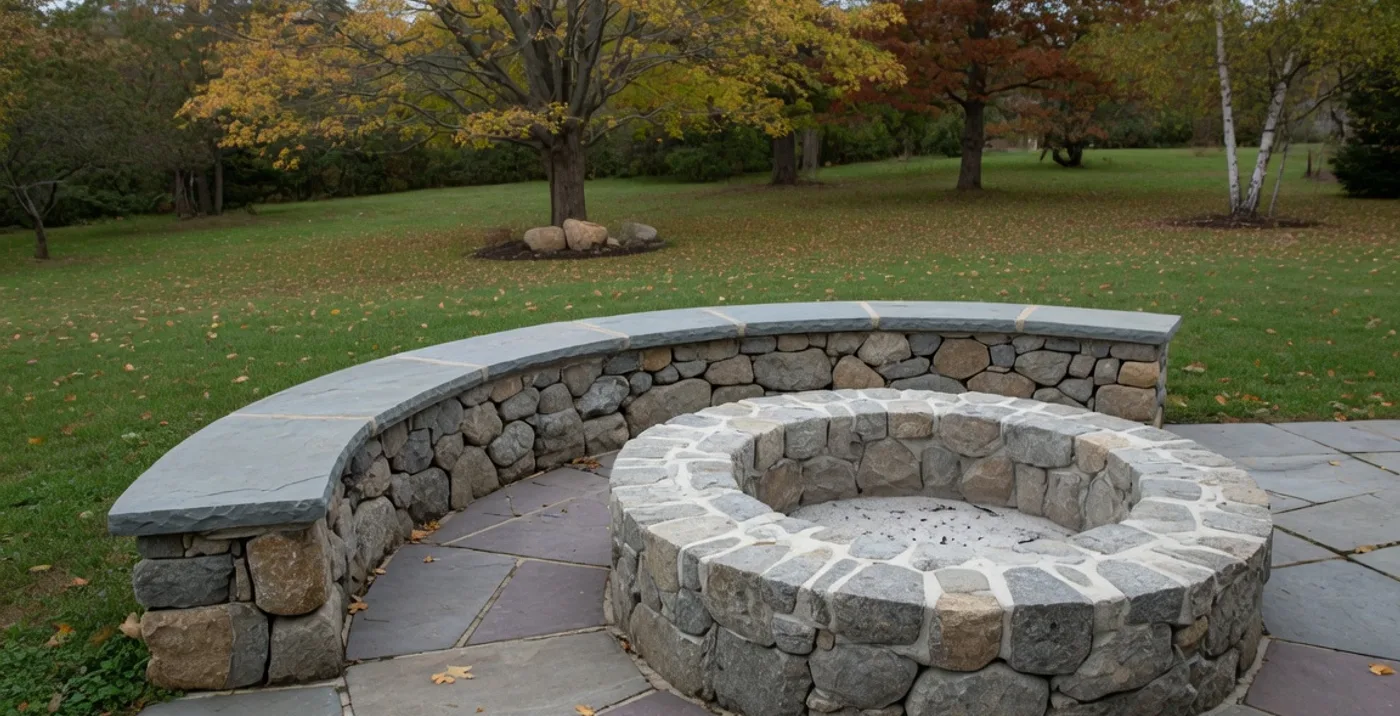
An outdoor fireplace or fire pit transforms a backyard from a place you mow into a place you actually use — extending the outdoor season into spring and fall, anchoring patio designs, and creating the kind of gathering space that becomes the most-used part of a home. The right design depends on how you want to use the space, the materials of your home and patio, and your budget.
Innovative Masonry & Restoration designs and builds custom outdoor fireplaces, fire pits, and fire features across Fairfield, New Haven, Hartford, Middlesex and Litchfield Counties.
Outdoor Fireplaces vs Fire Pits — Which Is Right for You?
Outdoor Fireplaces
A vertical structure with a firebox and chimney — the same form as an indoor fireplace, just outside. Outdoor fireplaces:
- Provide directional heat (you sit facing it, like indoors).
- Anchor a patio with a strong vertical visual presence.
- Cost more to build than fire pits, with a wide range based on size and features.
- Require a dedicated footing and proper draft design.
- Can include integrated wood storage, mantels, and TV niches.
Fire Pits
A round, square, or rectangular open fire feature, usually 18"-30" tall. Fire pits:
- Provide 360-degree heat (people sit around it).
- Cost less to build than full outdoor fireplaces.
- Work with smaller patio footprints.
- Are easier to integrate with seating walls and built-in benches.
- Can be wood-burning or gas (gas requires a buried gas line and isn't always practical).
Most homeowners get more day-to-day use from a fire pit than a fireplace. Fireplaces are stronger statements and great for entertaining, but the fire pit's communal seating arrangement is often more pleasant.
Materials We Build With
- Natural stone — bluestone, fieldstone, granite, limestone. Highest visual quality and longest-lasting.
- Stone veneer — over a concrete block core. Cost-effective way to achieve a natural stone look.
- Brick — traditional choice for traditional homes. Beautiful aging characteristics.
- Concrete block with stucco or stone facing — most cost-effective construction.
- Manufactured fire pit kits — engineered ring kits from Belgard, Techo-Bloc, etc. Pre-designed for fast, predictable installation.
Outdoor Fireplace Design Considerations
Footing
An outdoor fireplace needs a substantial footing — typically 4'-6' deep, reaching well below frost line, with rebar reinforcement. The footing extends beyond the fireplace footprint to support the structure.
Firebox & Throat
The firebox is lined with firebrick (refractory brick) and refractory mortar. The throat above the firebox controls draft and prevents smoke from rolling out. Proper throat design is what separates a fireplace that smokes you out of your patio from one that draws cleanly.
Chimney
The chimney is sized to the firebox opening — typically a 1:10 ratio of firebox opening to flue area. Too small and the fireplace smokes. Too large and the chimney never gets warm enough to draft properly. We design and build to proper draft principles.
Hearth & Surround
The hearth (the floor of the fireplace area) and the surround (the visible face of the fireplace) are the most visible elements. We work with you on material selection, color, and style to integrate the fireplace with the rest of the patio and home.
Fire Pit Design Considerations
Wood-Burning vs Gas
Wood-burning fire pits are simpler to build and don't require gas lines, but they need a clear smoke path and produce ash to clean up. Gas fire pits are cleaner and easier to start but require a buried gas line, valve box, and burner ring assembly. We do both.
Sizing
Fire pit interior diameter typically 30"-48". Outer diameter (with the surrounding stone) usually 4'-6'. Larger isn't always better — a 6' diameter fire pit creates too much distance between the fire and the people sitting around it.
Drainage
Wood-burning fire pits need drainage at the base — water collected in the pit becomes a stagnant pool. We build in either a perforated metal grate base or a gravel-filled dry well so water drains away.
Seating Integration
Fire pits work best when paired with built-in seating — either a circular or curved seating wall, or built-in benches. We design fire pits to integrate with seating walls during the same construction.
Permits, Code, and Setbacks
Most CT towns require setback distances between fire features and property lines, structures, and overhead trees. Some towns require building permits for permanent fire features, particularly outdoor fireplaces. We confirm local requirements during the estimate phase and handle permitting when needed.
Service Area
Outdoor fireplace and fire pit construction across Fairfield, New Haven, Hartford, Middlesex and Litchfield Counties — including New Haven, Hamden, Madison, Guilford, Branford, Hartford, West Hartford, Avon, Glastonbury, Middletown, Durham, Cheshire, Wallingford, and surrounding towns.
Frequently Asked Questions
How much does an outdoor fireplace cost?
Outdoor fireplace cost depends on size and height, materials (natural stone is the most expensive option, stone veneer over a concrete block core is more cost-effective), integrated features (wood storage, mantel, TV niche, decorative surround), footing requirements, and chimney design. Costs vary widely between simpler designs and elaborate showpiece fireplaces. We provide free written estimates after a design discussion to establish your priorities, materials, and feature list.
How much does a fire pit cost?
Fire pit cost depends on materials, size, whether it is custom-built or built using a manufacturer kit, whether it is wood-burning or gas (gas requires a buried gas line and burner assembly which adds cost), and whether integrated seating walls or surrounding patio work is part of the project. We provide free written estimates after a site visit.
Wood-burning vs gas fire pit — which is better?
Wood-burning is more popular for the experience (real fire, the smell, the crackle) but requires wood storage, lighting, and ash cleanup. Gas is cleaner and instant-on but lacks some of the ambiance and requires a gas line. Most homeowners pick wood-burning for primary patios and gas for smaller secondary spaces or rooftop terraces.
Can you build an outdoor fireplace on an existing patio?
Usually only with a separate dedicated footing — outdoor fireplaces are too heavy to sit on a typical paver patio base. We can add a fireplace to an existing patio by excavating and pouring the footing, then integrating the visible structure with the surrounding patio. The patio base in the fireplace area may need reinforcement.
Do you need a permit for an outdoor fire pit?
It varies by town. Some Connecticut municipalities require permits for any permanent fire feature; others only for outdoor fireplaces with chimneys. Setback requirements (distance from property lines, structures, trees) almost always apply. We check local requirements during the estimate.
How do I keep my outdoor fireplace from smoking into the patio?
Proper firebox-to-flue ratio, correct chimney height, throat design, and chimney location relative to prevailing winds. A well-designed fireplace draws cleanly even in light wind. A poorly designed one smokes back into the seating area constantly. The design phase matters more than the build phase for fireplace performance.