
Stone Steps & Masonry Stairs in Connecticut
Innovative Masonry & Restoration
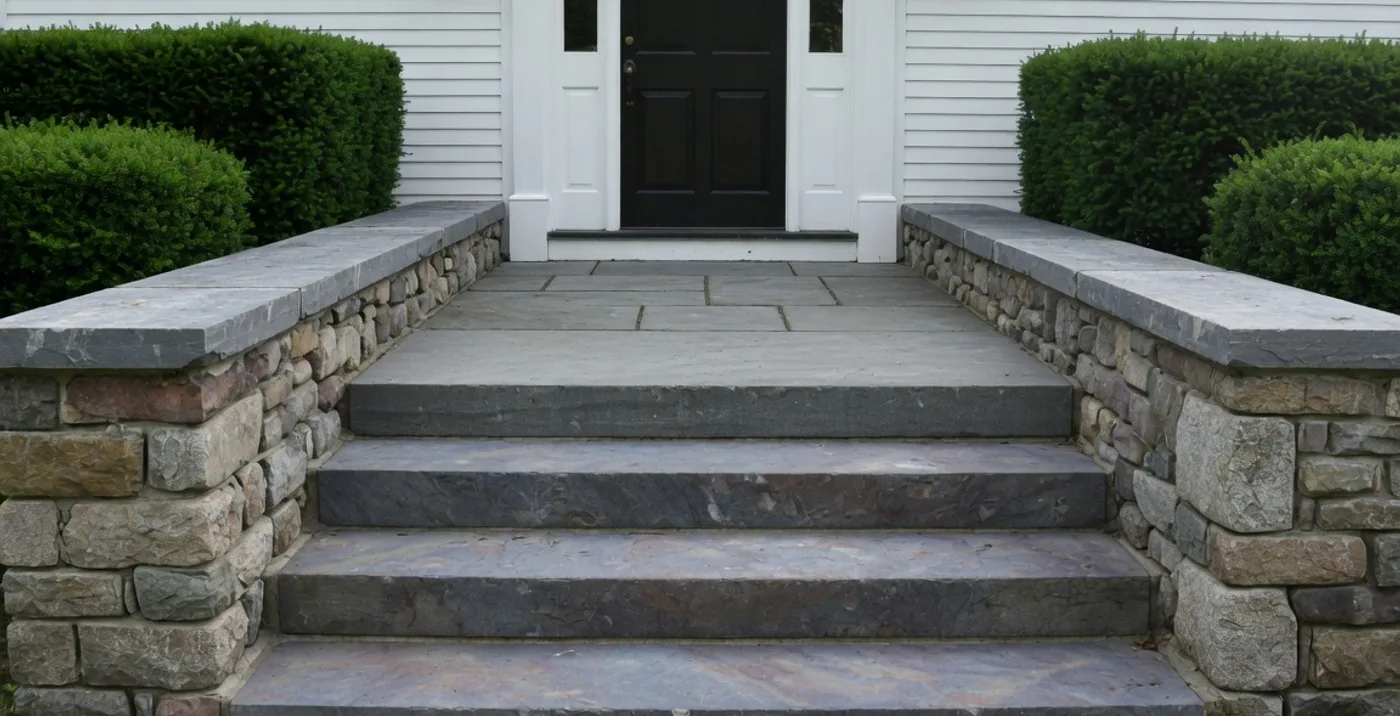
Few exterior upgrades have the visual impact of replacing tired concrete steps with natural stone. Stone steps add immediate curb appeal, last decades longer than concrete, and look better with every passing year as they weather. They're also one of the most common masonry repairs we do — older concrete steps are notorious for cracking, settling, and crumbling in Connecticut's freeze-thaw climate.
Innovative Masonry & Restoration designs, builds, and repairs stone and masonry steps across Fairfield, New Haven, Hartford, Middlesex and Litchfield Counties.
Materials We Use
Bluestone Steps
The most popular choice for residential entry steps in Connecticut. Bluestone has natural slip resistance, excellent freeze-thaw durability, and a beautiful natural color that ranges from gray to blue-gray to brown. Available as thermal-finish (sawn smooth top, square edges) or natural cleft (textured top, sometimes irregular edges).
Granite Steps
Granite is the most durable step material available — extremely resistant to weathering, salt, and abrasion. Most granite steps in CT are split-face (textured top with rock-cut sides) which gives strong tread grip. Available in light gray, dark gray, and warmer tan colors.
Brownstone Steps
Traditional New England material with a warm reddish-brown color. Common on older homes — particularly Victorian-era and brownstone-style homes. We restore existing brownstone steps and install new ones using compatible material.
Fieldstone Steps
Irregular natural fieldstone steps for informal garden paths and rustic landscapes. Each step is one-of-a-kind, set into the slope with mortared joints between stones. Best for natural, garden-style settings rather than formal entries.
Brick Steps
Brick steps complement traditional, colonial, and Federal-style homes. Brick steps require quality construction — proper footings, matching brick, and tight mortar joints — to last in Connecticut's climate.
Pre-Cast Concrete Step Systems
Engineered pre-cast concrete steps in textured finishes that mimic natural stone. Fastest installation and most cost-effective option. Good fit for utility entries, side doors, and budget-conscious projects.
Why Stone Steps Outlast Concrete
Poured concrete steps in Connecticut typically start showing problems within 10-15 years — surface scaling, cracks, exposed aggregate, settling. The same step in natural stone routinely lasts 50-100+ years with no significant deterioration. Stone is more expensive to install but cheaper over time when factoring in concrete step replacement and repair costs.
Step Construction Details That Matter
- Frost-line footings: The step structure must sit on footings that go below the Connecticut frost line (42" minimum) so the steps don't heave with each winter.
- Compacted base: Below frost-line footings, a properly compacted gravel base eliminates settling.
- Pinned step treads: Larger stone treads are mechanically pinned to the structure below — not just sitting in mortar.
- Drainage: Water needs to drain off and away from the step structure, not pool against it.
- Riser height consistency: Building code requires consistent riser height (typically 4"-7.75" depending on step type and town) and consistent tread depth.
- Slip-resistant tread surfaces: Smooth, polished stones are dangerous in winter. We use textured-finish stones for treads.
Step Repair
We repair existing stone, brick, and concrete steps that are settling, shifted, cracked, or have damaged treads. Common repairs:
- Re-leveling settled steps where the underlying base has shifted.
- Replacing individual cracked or damaged treads.
- Repointing failed mortar between brick or stone steps.
- Rebuilding seriously damaged step sections while preserving the surrounding structure.
- Adding handrails (we coordinate with metalworkers for ornamental railings).
Steps Within Larger Projects
Steps are often part of a larger landscape project — connecting a paver walkway to a higher front porch, transitioning between patio levels, or providing access to a tiered backyard. We integrate steps into walkway, patio, and retaining wall projects with consistent material and proper drainage flow.
Permits & Code
Most CT towns require permits for replacement of front entry steps and any step work attached to the home. We handle the permitting process when needed.
Service Area
Stone steps and stairs across Fairfield, New Haven, Hartford, Middlesex and Litchfield Counties — including New Haven, Hamden, Madison, Guilford, Branford, Hartford, West Hartford, Glastonbury, Middletown, Durham, Cheshire, Wallingford, and surrounding towns.
Frequently Asked Questions
How much does it cost to replace concrete steps with stone?
Stone step replacement cost depends on the stone material chosen (bluestone, granite, brownstone, fieldstone), the number of steps, the step width and tread depth, the complexity of integration with the existing landscape and walkway, and whether removal of existing concrete or other material is needed. Footing work to reach below the Connecticut frost line is included on every project — this is what separates a step that lasts 50+ years from one that heaves with the first winter. We provide free written estimates after a site visit.
Are bluestone steps slippery in winter?
Thermal-finish bluestone has slip resistance comparable to most exterior stone materials. Natural cleft bluestone — with its textured surface — has even better grip. We do not recommend polished or honed-smooth stone for exterior steps in CT due to ice safety concerns.
How long do stone steps last?
Properly built stone steps with frost-line footings and proper drainage routinely last 50-100+ years in Connecticut. The step material itself is essentially permanent. Periodic repointing of mortar joints (every 25-30 years) is the only typical maintenance.
Can I just patch my crumbling concrete steps?
Sometimes — for minor cosmetic damage. But once concrete steps are seriously cracked, settling, or have lost significant material, patching usually fails within a season or two. The freeze-thaw cycle that caused the original damage will cause the patch to fail too. We can assess whether repair or replacement is more cost-effective.
Do you build curved or fan-shaped steps?
Yes — radius steps and fan-shaped landings are common in formal landscape designs. They cost more than rectangular steps because each tread requires custom cutting, but they make a dramatic visual statement at the front entry.
Can stone steps be added to an existing front porch?
Yes — we frequently install new stone steps attached to existing porches, decks, or front platforms. The new steps are built with their own footings and structurally independent of the porch, with proper flashing where they meet the existing structure.
Why are my brick steps crumbling after winter?
Brick step deterioration in winter is a classic freeze-thaw failure. The bricks absorb water (usually from snow, ice melt, or salt), the water freezes inside the brick, expands, and breaks the brick from the inside. This is accelerated when steps were built without proper drainage, with too-hard mortar, or with the wrong brick (interior brick instead of frost-resistant brick). We assess the cause, replace damaged bricks with frost-resistant material, repoint with appropriate mortar, and address drainage issues that contributed.