
Outdoor Kitchens & BBQ Islands in Connecticut
Innovative Masonry & Restoration
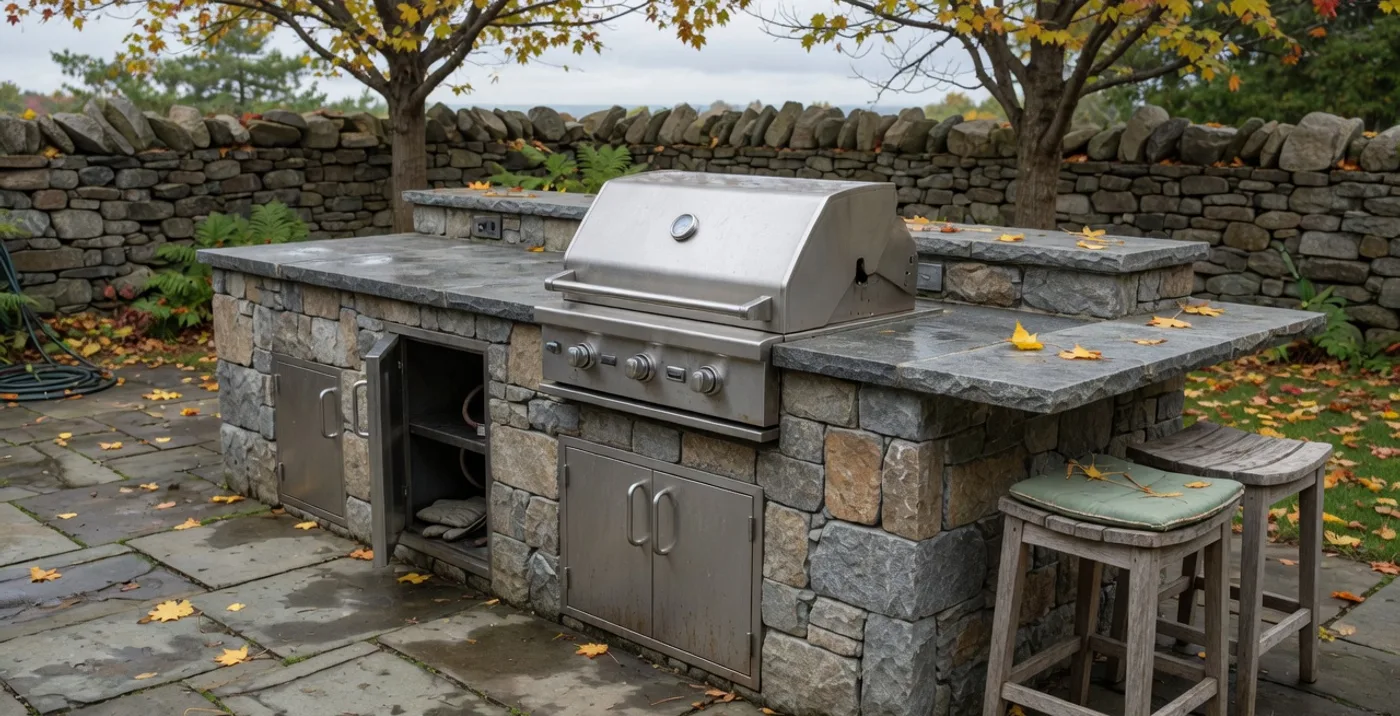
An outdoor kitchen turns a backyard from a place you visit on weekends into a place you actually live during the warm months. Done right, an outdoor kitchen anchors a patio, dramatically extends entertaining space, and increases home value substantially. Done wrong, it leaks, drains poorly, won't survive Connecticut winters, and looks like an afterthought.
Innovative Masonry & Restoration designs and builds custom outdoor kitchens, BBQ islands, and grill stations across Fairfield, New Haven, Hartford, Middlesex and Litchfield Counties. We handle the masonry side; we coordinate with licensed plumbers and electricians for the gas, water, and power runs.
What's in an Outdoor Kitchen Build?
An outdoor kitchen is fundamentally a masonry structure designed to house outdoor-rated appliances, withstand New England weather, and provide functional countertop space. The core build typically includes:
- Concrete block or steel-stud core structure — provides structural integrity and an attachment surface for facing materials.
- Stone veneer, brick, or stucco facing — the visible exterior, matched to your home and patio.
- Countertop slab — granite, bluestone, soapstone, or concrete depending on style and budget.
- Cutouts for built-in appliances — grill, side burner, refrigerator, sink, drawer/door units.
- Utility runs — gas line for grill and burners, electrical for refrigerator and lighting, water/drain if a sink is included.
- Footing/foundation — substantial enough to support the masonry weight and below the Connecticut frost line where applicable.
- Drainage detailing — countertop edge profiles, weep details, and patio integration that sheds water away from the structure.
Layout Types
BBQ Island / Grill Island
A free-standing rectangular island, typically 6-10 feet long, with a built-in grill, prep counter, and storage. Often paired with bar-height seating on the side facing the patio. The most common and most cost-effective starting point.
Straight-Run Outdoor Kitchen
A linear kitchen along one wall or one edge of a patio — typically 10-16 feet, with grill, side burner, prep area, and sometimes a small refrigerator or sink. Good fit for narrower patios or yards where you want to keep the open patio area unobstructed.
L-Shaped Outdoor Kitchen
Two perpendicular runs forming an L — typically 12-18 feet of total countertop. Allows separation of the cooking zone from the prep/serving zone. Good fit for medium-sized patios where you want full functionality without the size of a U-shape.
U-Shaped Outdoor Kitchen
Three runs forming a U or horseshoe shape, often with a bar overhang on the open side for seating. The most functional layout for serious entertaining — separate cooking, prep, and bar zones. Requires significant patio space.
Common Features We Build In
- Built-in grill — gas (most common, requires gas line) or charcoal/wood (no gas line needed).
- Side burner — for sauce pots, side dishes, and accessories.
- Pizza oven — built-in masonry pizza oven, wood-fired or gas. Significantly more involved than a standard grill build.
- Smoker / kamado / Big Green Egg housing — masonry surround for ceramic and offset smokers.
- Outdoor refrigerator — UL-rated outdoor refrigerator (regular indoor refrigerators do not survive outdoor exposure).
- Sink with prep area — requires water supply, drain, and freeze protection or seasonal shut-off.
- Storage drawers and access doors — stainless drawer/door units integrated into the masonry structure.
- Bar overhang seating — countertop overhang to allow bar stools on the open side.
- Accent lighting — under-counter LED, integrated overhead lighting, or step lighting.
- Adjacent dining area — pergola or pavilion structure, often built simultaneously.
Counter Materials
- Granite — most popular for outdoor kitchens. Heat-resistant, weather-resistant, attractive, available in many colors. Most cost-effective premium option.
- Bluestone — cohesive with bluestone patios and walkways. Naturally weather-resistant. More casual look than granite.
- Soapstone — non-porous, heat-resistant, ages with character. Higher-end choice with classic look.
- Concrete (stamped or polished) — fully customizable in shape, color, and texture. Requires periodic sealing.
- Quartzite — heat-resistant natural stone, harder than granite, premium pricing.
We do not recommend engineered quartz (Caesarstone, Cambria, etc.) for outdoor use — it cannot tolerate UV exposure long-term and most manufacturers void warranty for outdoor installation.
Utilities & Coordination
Outdoor kitchens involve work from multiple trades. We handle the masonry and coordinate with:
- Licensed plumber — gas line installation (sized appropriately for total BTU load), water supply if a sink is included, drain or dry-well for sink wastewater.
- Licensed electrician — dedicated outdoor-rated circuit for refrigerator, lighting, and any outlets. GFCI protection required.
- Appliance installer or your selected appliance supplier — receiving, staging, and final installation of the grill, refrigerator, and other built-ins.
For larger builds, we typically establish a project schedule that sequences masonry construction, utility rough-ins, countertop fabrication and install, and appliance installation in the right order.
Outdoor Kitchen vs. Grill Station — Which Is Right?
If you grill three nights a week and entertain regularly, a full outdoor kitchen pays for itself in usage. If you grill occasionally and primarily want a more attractive grill setup, a simpler "grill station" — a smaller masonry surround for the grill plus a small prep counter — is often the right answer at a fraction of the cost.
We discuss usage patterns during the design phase to help right-size the project.
Connecticut Climate Considerations
Outdoor kitchens in CT need to handle:
- Freeze-thaw cycling — affects countertop seal joints, mortar joints, and any water lines. Proper detailing prevents cracking.
- Winter water management — sink lines need to be drained or freeze-protected. Faucets need to be frost-proof or replaceable.
- Snow load on overhead structures — pergolas and pavilions must be designed for CT snow loads.
- UV exposure — facing materials must be UV-stable. This is one reason we don't use engineered quartz.
Service Area
Outdoor kitchen and BBQ island construction across Fairfield, New Haven, Hartford, Middlesex and Litchfield Counties — including New Haven, Hamden, Madison, Guilford, Branford, Hartford, West Hartford, Avon, Glastonbury, Middletown, Durham, Cheshire, Wallingford, and surrounding towns.
Frequently Asked Questions
How much does an outdoor kitchen cost in Connecticut?
Outdoor kitchen cost varies significantly with size, layout, materials, and the appliance package selected. A simple grill island with prep counter is far less than a full U-shaped kitchen with multiple appliances, sink, refrigerator, and bar seating. Cost factors include: the masonry structure size and materials (block-and-veneer is more cost-effective than full natural stone), countertop material (granite is the most popular, soapstone and quartzite are premium), appliance selection (grill, side burner, refrigerator, sink, smoker), and utility runs (gas, water, electrical). We provide free written estimates after a design discussion to establish priorities and scope.
Do I need permits for an outdoor kitchen?
It depends on town and scope. Most CT towns require electrical and gas permits (handled by your licensed electrician and plumber). Some towns require building permits for the masonry structure itself, particularly if it has a substantial footing or if a roof/pergola is included. Towns also enforce setback requirements from property lines and structures. We confirm requirements during the estimate phase.
Can I add an outdoor kitchen to my existing patio?
Often yes, but the area where the kitchen sits typically needs base reinforcement — a concrete pad or upgraded base — to support the masonry weight. We assess the existing patio during the estimate and incorporate any necessary reinforcement into the project scope.
Can you build a custom brick pizza oven into the kitchen?
Yes — wood-fired and gas pizza ovens can be built into outdoor kitchens or as standalone features. Pizza oven construction is more involved than standard grill builds (proper firebox refractory, dome geometry, chimney, insulation) but the result is a feature you cannot replicate with a portable unit. Allow additional design and build time for pizza oven projects.
How do you protect an outdoor kitchen for winter?
Sink water lines should be drained or have shut-off valves; faucets should be freeze-proof or removable. Refrigerators are unplugged and emptied. Counters can stay in place year-round; covers extend the life of stainless appliances. We provide a winterization checklist with every kitchen build.
Wood-fired or gas grill — which is better for a built-in?
Most homeowners choose gas for convenience — instant on, predictable temperature, no fuel storage. Some prefer charcoal or wood for flavor. We can build for either. Many projects include a gas grill as the primary cooker with a separate ceramic kamado or smoker for low-and-slow cooking — gives you both.
Do you handle the appliances and utilities yourself?
We handle the masonry construction. We work with your licensed plumber for gas and water, your licensed electrician for power, and your selected appliance supplier for delivery and installation. We coordinate the schedule across trades. Most clients work with appliance suppliers we have partnered with previously.