
The pattern you lay pavers in is not just a style choice. It changes how strong the surface is, how much cutting and waste the job involves, and how the finished space feels — formal, casual, modern or old-world. The right pattern for a driveway that carries a car every day is not the right pattern for a garden walkway.
Below are the paver patterns we install most often across Connecticut, what each one is good at, and where it belongs. Every pattern shown here is one you can lay out on your own space — with your own size and colors — in our free Paver Design Studio.
Running Bond
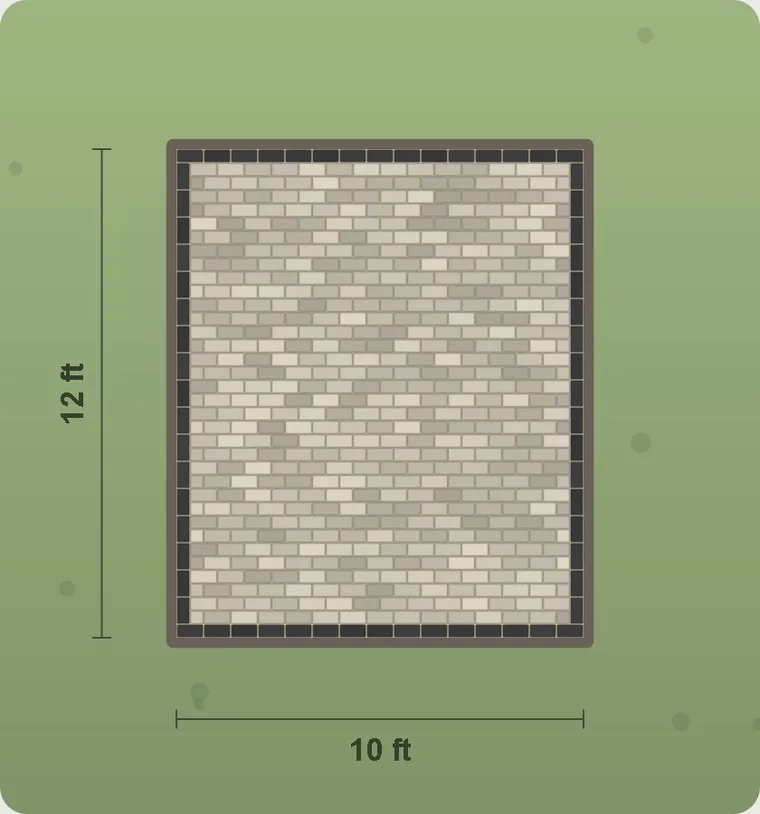
Running bond is the familiar "brick" layout: each row is offset from the one before it by half a paver. It is the simplest pattern to install, produces very little cut waste, and reads as clean and timeless. The offset also hides small size variations between pavers well.
Because the joints line up in only one direction, running bond has less interlock than herringbone. On a driveway it should always run across the direction of traffic, never along it, or the rows can slowly creep apart. For walkways and patios it is an excellent, budget-friendly default.
Herringbone (45° and 90°)
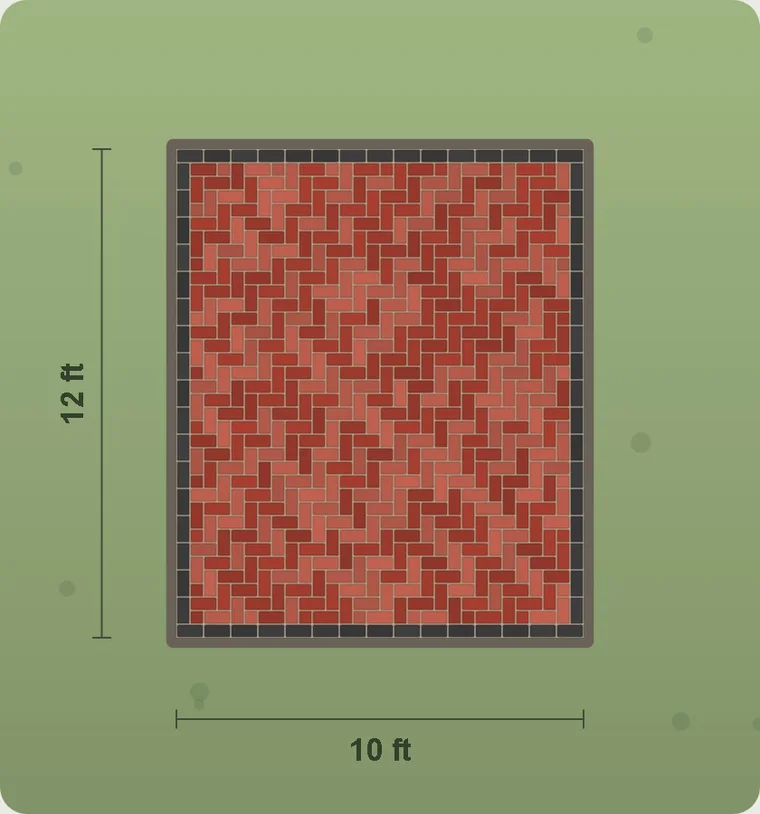
Herringbone locks rectangular pavers together in a zig-zag so that forces are shared in two directions instead of one. That interlock is why it is the standard for paver driveways — it resists the twisting, braking and turning loads of vehicles far better than any aligned pattern, and it will not creep.
The 90° version sits square to the border; the 45° version runs on the diagonal for a more dynamic, high-end look (and slightly more cutting at the edges). Both are equally strong. Herringbone works beautifully on patios and walkways too — it just happens to also be the toughest option.
Basket Weave
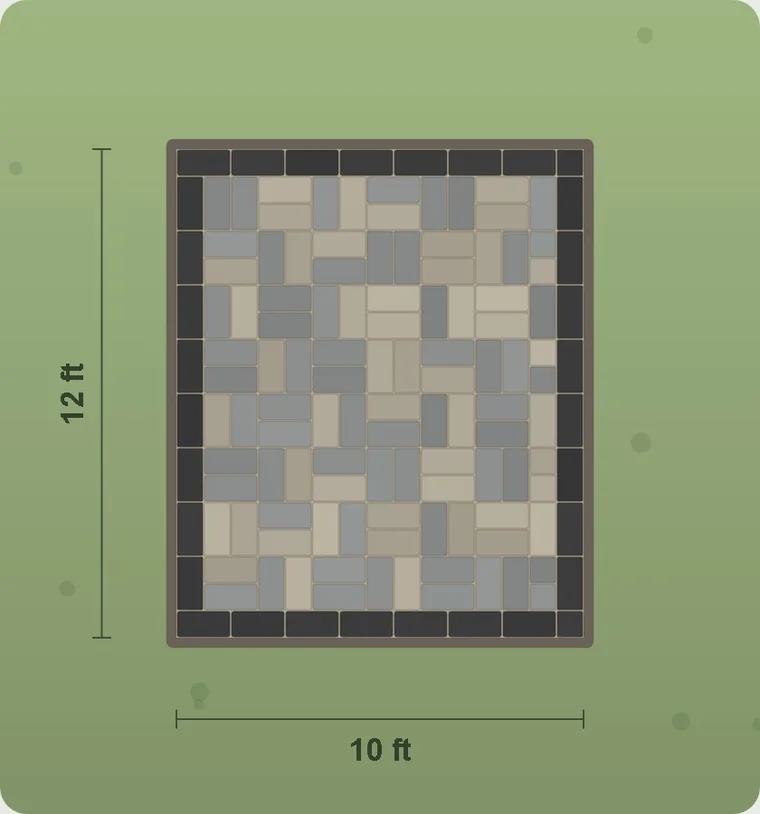
Basket weave alternates pairs of pavers laid horizontally and vertically, so the surface looks woven. It is a traditional, colonial pattern that suits historic New England homes and formal gardens. Strength is moderate — good for patios and walkways, not the first choice for a driveway.
Stack Bond
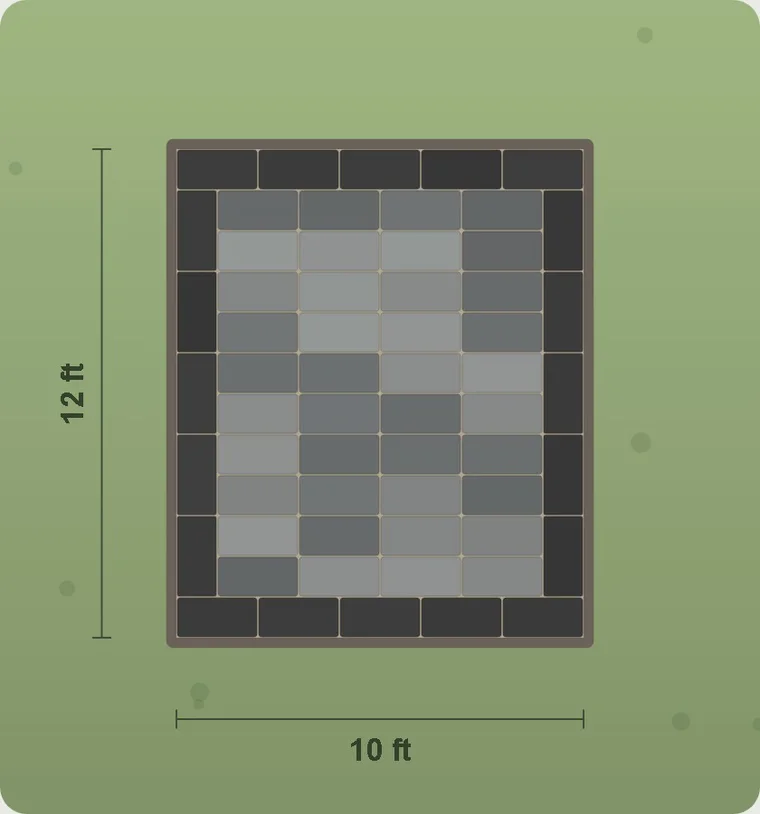
Stack bond lines every paver up in a perfect grid. It is the most modern-looking layout and pairs especially well with large-format slabs. The trade-off is strength: with every joint aligned in both directions, there is essentially no interlock, so it is meant for pedestrian areas — contemporary patios, courtyards and walkways — not vehicle loads.
Random Ashlar
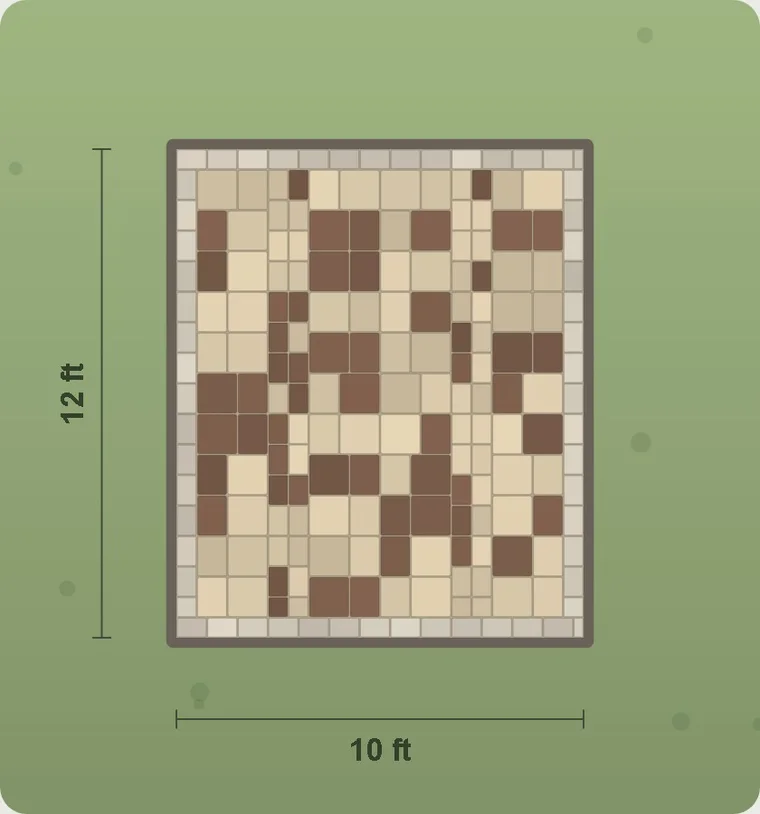
Random ashlar mixes several paver sizes in an irregular, non-repeating layout that looks like natural cut stone. It is our go-to for large patios where a single repeating pattern would feel monotonous, and it forgives slight irregularities in the stone. The look is relaxed and high-end at the same time.
How to Choose a Paver Pattern
A quick way to narrow it down:
- Driveway or heavy load? Herringbone, every time — it is the strongest interlock.
- Large patio? Random ashlar or herringbone to avoid a flat, repetitive look.
- Walkway on a budget? Running bond — simple, classic, low waste.
- Modern home? Stack bond with large-format pavers.
- Historic or traditional home? Basket weave or brick-style running bond.
Pattern Is Only Half the Job
In Connecticut, what keeps a paver surface flat and crack-free for decades is not the pattern on top — it is the compacted base, the drainage, and the edge restraint underneath it. A beautiful herringbone driveway on a thin or poorly drained base will still heave. We cover why in Best Pavers for Connecticut's Freeze-Thaw.
Try these patterns on your own space
Pick a walkway, patio or driveway, choose any pattern and color, and see it rendered instantly. When you like it, send the design straight to us for a quote.
Open the Paver Design Studio →