
A walkway is narrow, so the pattern reads differently than it would on a wide patio — it should lead the eye toward the door and feel proportional to the path. These are the layouts that work best for front walks, garden paths and side-yard runs.
Running Bond — the classic walkway
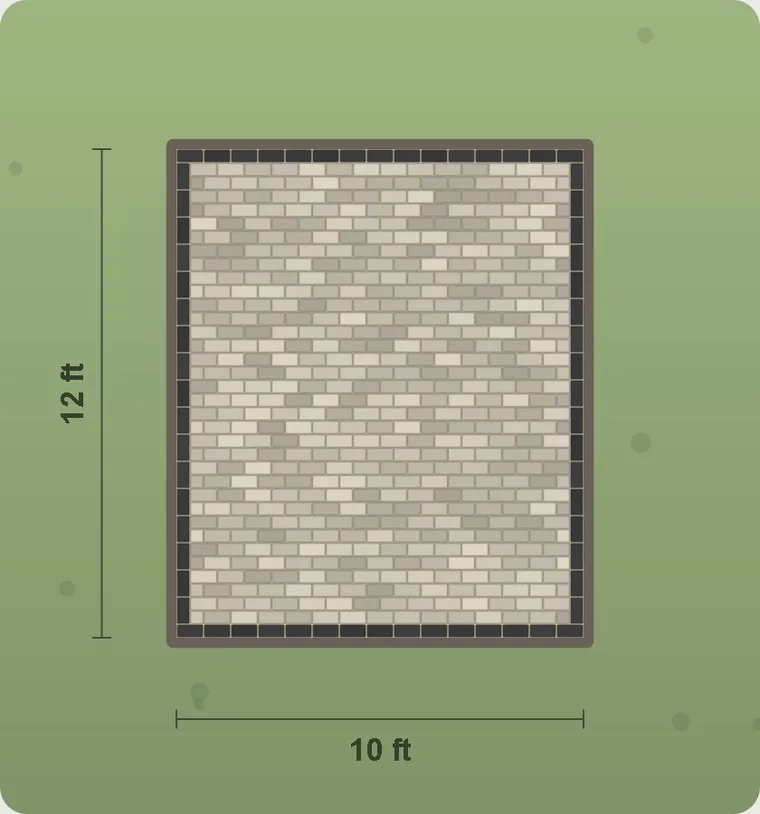
Running bond is the most popular walkway pattern for a reason: it is clean, timeless, and cheap to install with very little cut waste. Laid across the direction you walk, the long joints make a narrow path feel wider. Laid along the path, it draws the eye forward toward the entry. Either works — it depends on the effect you want.
Herringbone — for high-traffic and sloped paths
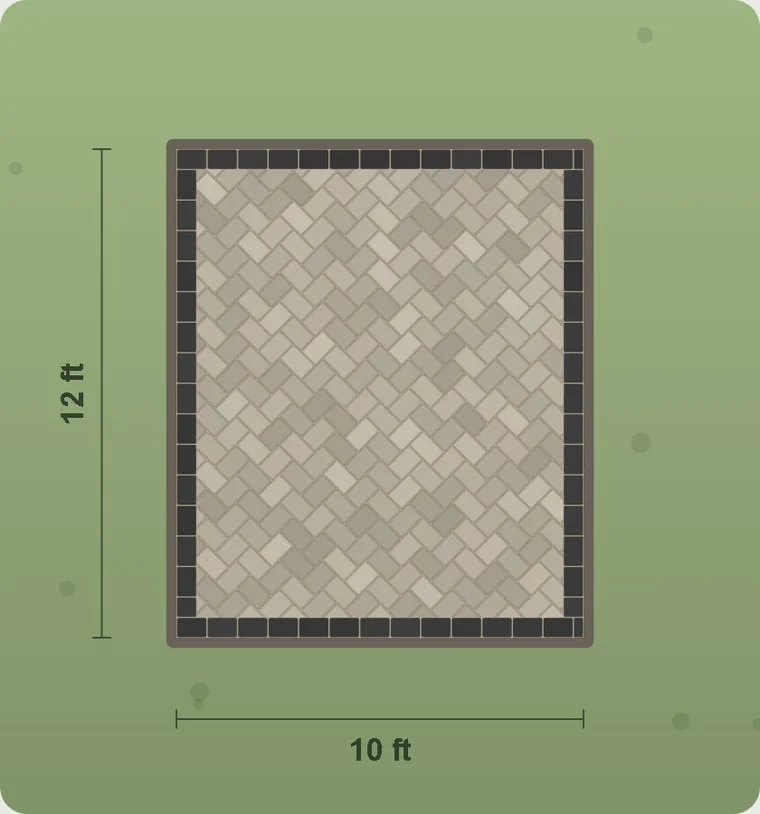
If your walk gets heavy use, runs on a slope, or you just want a more upscale look, herringbone is the answer. Its two-directional interlock keeps pavers from shifting underfoot and handles freeze-thaw movement better than aligned patterns. A 45° herringbone in particular gives a front walk a refined, custom feel.
Add a soldier-course border
Whatever field pattern you choose, a contrasting border — a single row of pavers set end-to-end along both edges (a "soldier course") — frames the walk, hides the edge cuts, and locks the field pavers in place. It is the single detail that most separates a professional walkway from a DIY one.
A note on width and base
- Width: 3 ft is comfortable for one person; 4–5 ft lets two walk side by side and is worth it for a main front walk.
- Base: even a light-duty walkway needs a compacted gravel base and edge restraint, or Connecticut's freeze-thaw cycle will lift and separate it. See Best Pavers for CT's Freeze-Thaw.
Design your walkway in minutes
Set your path length and width, try running bond or herringbone, add a border and pick your colors — then send the exact design to us for a quote.
Open the walkway designer →