
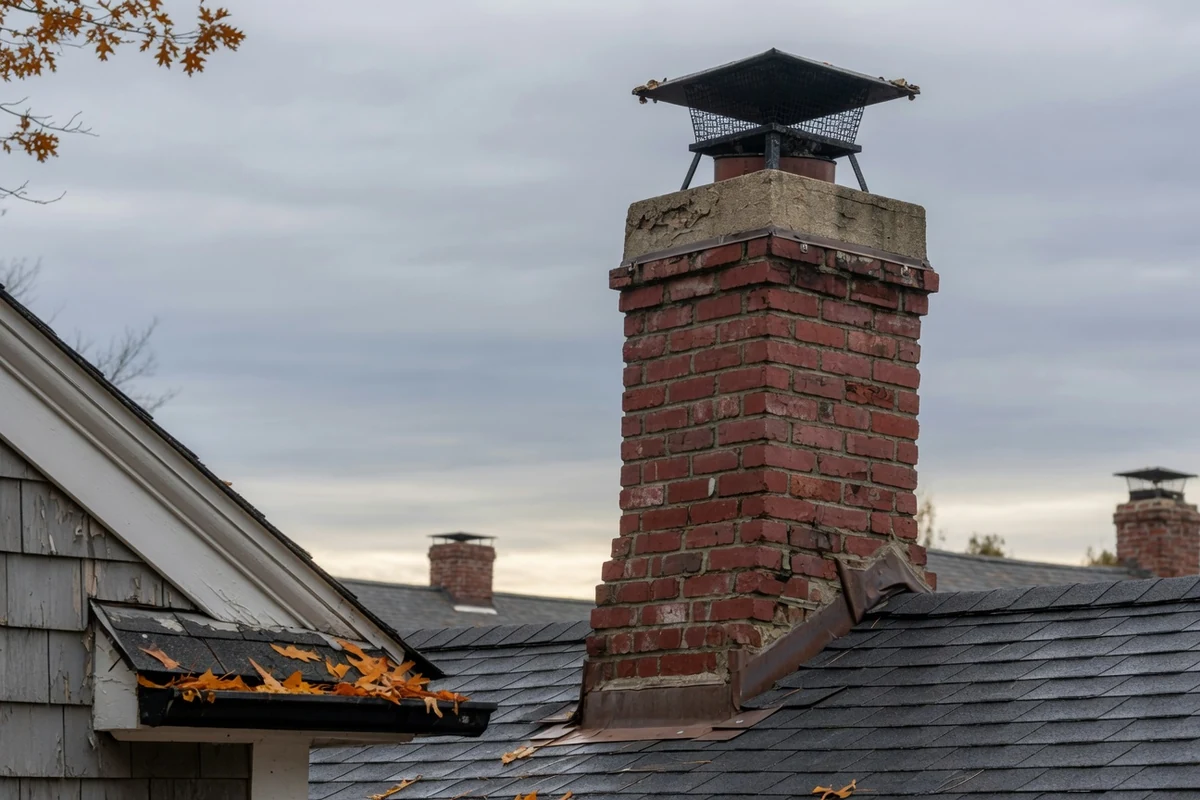
The honest answer to "how long does a brick chimney last?" is: a very long time, if properly maintained — and not very long at all, if neglected. Connecticut has chimneys built in the 1880s and 1890s that are still structurally sound today. It also has chimneys built in the 1980s that are in serious disrepair. The difference is almost always maintenance, not material quality.
But there is an important distinction to make: the brick in a chimney has a very different lifespan from the components of a chimney. Understanding this distinction is the key to not being surprised by what chimneys need and when.
Component-by-Component Lifespan
How Connecticut's Freeze-Thaw Cycle Changes the Math
Every lifespan estimate above is shorter in Connecticut than it would be in, say, the Southeast or Southwest. Connecticut averages 30–70 freeze-thaw cycles per year — temperatures crossing the 32°F threshold repeatedly throughout winter and early spring. Every cycle works on any crack in the mortar or crown, expanding it slightly. What would be a cosmetic crack in a warmer climate becomes structural damage in New England within a few seasons.
This is why chimneys in Connecticut typically need repointing every 20–25 years rather than the 30-year guideline sometimes cited for sheltered brick walls. The chimney's exposure — four sides fully open to weather — compounds the effect.
What Cuts Chimney Life Short
- No chimney cap: Allows rain, snow, and animals directly into the flue. Accelerates crown and liner deterioration dramatically.
- Cracked or missing crown: The crown is the chimney's primary water deflector. A cracked crown lets water pour down between the flue liner and the brick every time it rains.
- Wrong mortar type for the brick: Modern hard Portland cement mortar applied to older soft brick causes the brick to spall — the mortar does not absorb movement, so the brick does. This is the single most common cause of premature chimney brick failure.
- Ignored repointing: Waiting until mortar is visibly missing rather than repointing when joints start to erode means water has been infiltrating for years before any repair happens.
- Chimney fires: Even a small chimney fire can crack clay flue liners and mortar joints throughout the chimney. After a chimney fire, professional inspection is mandatory.
A Practical Maintenance Schedule for Connecticut Chimneys
- Every year: Visual inspection from the ground — look for visible mortar loss, spalling brick, cap condition.
- Every 3–5 years: Close inspection of the crown, cap, and upper courses — ideally from a ladder or drone. This is when small problems are caught before they become expensive ones.
- Every 20–25 years: Professional repointing inspection. Many chimneys will need partial or full repointing at this interval.
- If you use the fireplace: Annual sweeping and inspection by a certified chimney sweep. Separate from masonry inspection but equally important.
The Most Important Thing to Know
A brick chimney that gets periodic attention — repointed when the mortar starts to erode, crowned when it cracks, capped properly — will almost certainly outlast every other part of the house. A chimney that gets ignored until problems are visible typically costs 3–5× more to repair than one that was maintained along the way. The economics of chimney maintenance strongly favor early, smaller interventions.
We inspect and repoint chimneys across Connecticut. Schedule an inspection →
Not Sure What Your Chimney Needs?
We inspect chimneys across Connecticut and provide written estimates covering exactly what needs to be done now, what can wait, and why. Free estimates after a site visit.
Schedule a Chimney Inspection