
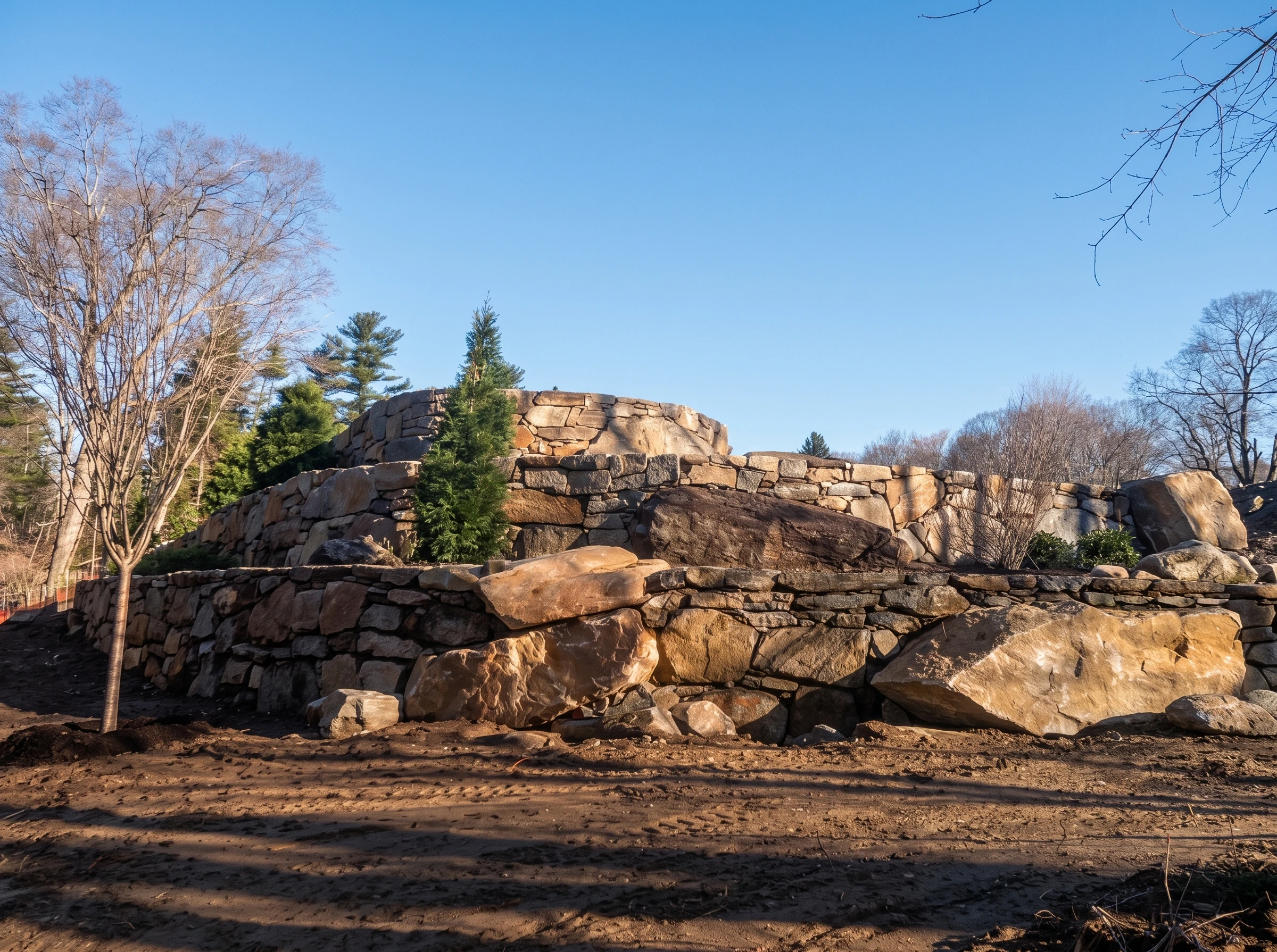
The footing under a retaining wall is the part nobody sees — and it is the part that almost entirely determines whether the wall lasts five years or fifty. In Connecticut's freeze-thaw climate, footing depth and design are not optional details; they are the entire story of wall longevity.
The Connecticut Frost Line
The frost line is the depth to which soil routinely freezes in winter. In Connecticut, the building code specifies a minimum frost line depth of 42 inches (3.5 feet) for permanent footings. In practice, most building departments require footings to reach 42-48 inches.
If a footing is above the frost line, the soil under it freezes and expands every winter, and the entire wall lifts and shifts with each freeze cycle. After a few winters, the wall is cracked, leaning, or both — sometimes dramatically.
How Deep Should the Footing Actually Be?
The "footing depth" includes everything below the visible wall. A typical proper retaining wall footing in Connecticut consists of:
- Excavation depth: 48 inches below grade to clear the frost line with margin.
- Compacted gravel base: 6-12 inches of crushed stone or process gravel, fully compacted.
- Concrete or stone footing: 8-12 inches thick, properly sized for the wall above.
- Wall start: First course of wall begins on the prepared footing, typically still below grade by a few inches.
What Width Should the Footing Be?
Footing width is generally 1.5-2x the wall thickness, depending on the soil conditions and wall height. A wall that is 12 inches thick at the base typically gets an 18-24" wide footing. Taller walls or walls in poor soil require wider footings.
Footing Requirements by Wall Type
Dry-Stacked Fieldstone Walls
Even traditional dry-stacked walls benefit from a proper footing — typically a compacted gravel trench at least 12 inches deep, ideally extending to frost line. The lighter weight of dry-stacked stone (compared to mortared work) is more forgiving of frost movement, but proper footing prevents the wall from settling unevenly.
Mortared Stone or Brick Walls
Mortared walls are stiff — they cannot flex with frost movement. They require full frost-line footings (concrete or compacted aggregate), 42-48 inches minimum. Skipping this on a mortared wall guarantees cracks within the first few winters.
Segmental Block Systems
Manufacturer specifications typically require a 6-12" compacted aggregate base. The full system (with geogrid reinforcement on taller walls) is engineered to flex slightly with frost movement, but proper base preparation is still essential.
Poured Concrete Walls
The most demanding for footings. Concrete walls cannot flex at all. They require full frost-line footings, often with rebar continuity from footing to wall. Improper concrete footings result in stepped cracks running diagonally from the corners.
Why DIY and Cheap-Contractor Walls Fail
The most common reason backyard retaining walls fail in Connecticut: inadequate footings. Common shortcuts:
- "Just sit the wall on packed dirt" — fails within 1-2 winters.
- 4-6 inches of gravel under the wall (not even close to frost depth) — fails within 2-4 winters.
- 12-24 inches of gravel (still above frost line) — survives a few seasons before issues.
- Footing only at the corners — wall heaves between footings.
A wall built on a proper 42-48 inch footing costs more upfront — both in materials and excavation — but it does not fail. It is the single most cost-effective investment in a retaining wall project.
Drainage Goes With the Footing
Proper footings need proper drainage. The footing area must drain — water collecting around the footing during winter can cause heaving even at frost-line depth. Standard practice is:
- Perforated drain pipe at the base of the wall, set in the gravel above the footing.
- Drainage stone (clean crushed stone) extending up behind the wall to within a few inches of grade.
- Daylight outlets or connection to a drainage system to carry water away.
Special Cases
Walls on Sloped Sites
Walls built on sloping ground need stepped footings — the footing follows the slope in horizontal sections, with vertical "steps" between them. Each section must still reach below frost line.
Walls Near Existing Structures
Footings near existing foundations need to be deep enough that excavating the new footing does not undermine the existing one. Typically the new footing should be at least as deep as the existing one, and engineering review may be required.
Walls in Poor Soil (Clay, Organic)
Heavy clay or organic-rich soils require deeper or wider footings, often with more substantial gravel base, to spread loads. Engineering is sometimes required.
When to Call a Professional
If you are getting estimates for a retaining wall, ask specifically about footing depth and drainage specification. Contractors who can answer in detail — "42-inch excavation, 8 inches of compacted gravel, drain pipe at the base, drainage stone up the back to grade" — are the ones whose walls last. Contractors who get vague are likely cutting corners on the part that matters most. See how we build retaining walls →
Build It Right the First Time
We build retaining walls with proper frost-line footings and drainage. Free site visits and detailed written estimates.
Schedule a Site Visit