
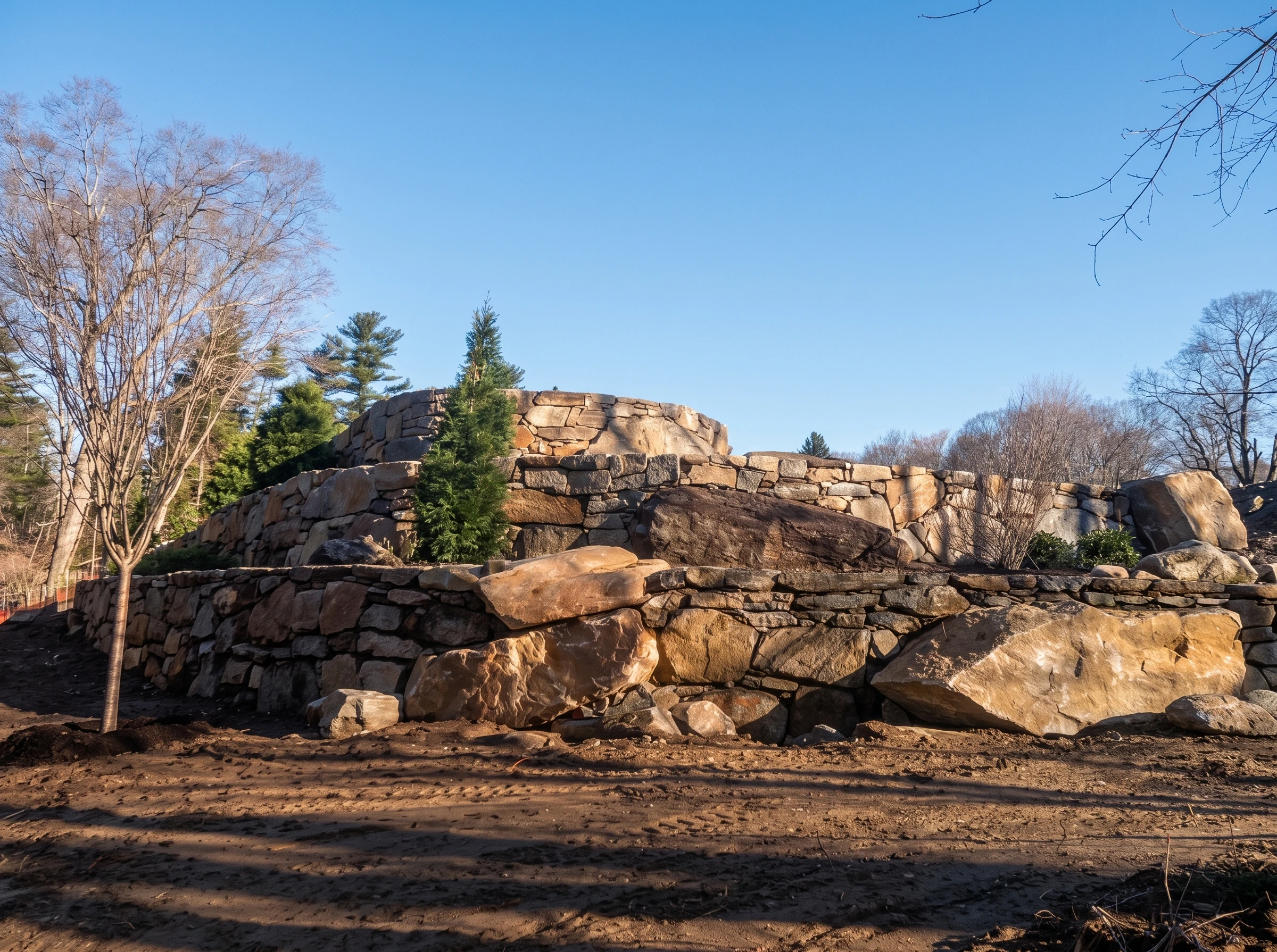
Before you build a retaining wall in Connecticut, the first practical question is often: do I need a permit? The answer is "it depends on your town and the wall height" — but the rules are reasonably consistent across most CT municipalities.
The General Rule in Connecticut
Most Connecticut towns require a building permit for retaining walls over 4 feet tall, measured from the bottom of the footing to the top of the wall. Some towns — particularly those with stricter zoning — require permits for walls over 3 feet, or even any retaining wall regardless of height.
Wall height in code language usually means the total exposed height plus the buried portion (from the top of the footing). A wall with 3 feet exposed and 2 feet buried is a 5-foot wall by code definition, even though only 3 feet is visible.
When You Almost Always Need a Permit
- Wall over 4 feet in total height.
- Wall in a setback zone (close to property line).
- Wall affecting a drainage easement.
- Wall holding back significant soil load near a structure.
- Wall in a wetlands or watershed protection zone.
- Wall associated with a pool, deck, or other structure requiring its own permit.
- Wall in a historic district (additional review beyond permit).
When You Probably Do NOT Need a Permit
- Decorative garden border walls under 18-24 inches.
- Free-standing landscape walls (not retaining soil) under 4 feet.
- Walls fully on your own property, not in a setback or easement.
- Some towns exempt walls under 3 feet that are not adjacent to property lines.
Always confirm with your local building department before starting. It is much cheaper to get a permit than to redo a wall after a stop-work order.
What a Permit Application Typically Requires
- Site plan showing wall location, dimensions, and property lines.
- Wall design specifications (materials, height, footing depth).
- For taller walls (typically over 4-6 feet, varies by town): stamped engineering drawings from a Connecticut-licensed structural engineer.
- Drainage plan showing how water is managed behind the wall.
- Building permit application form and fee.
Why Permits Exist (And Why They're Worth Getting)
Retaining walls are not just a landscape feature — they are structural elements holding back soil that can weigh thousands of pounds. A 6-foot wall holding back saturated clay soil can be holding back tons of force. When walls fail, they fail dramatically, and they can cause significant property damage and serious injury.
Permits ensure walls are designed and built to handle the actual loads. They also create a record of the work — which matters for insurance claims, future repairs, and home sales. Walls built without required permits often have to be torn out or retroactively engineered when discovered during real estate transactions.
What Happens If You Skip the Permit?
- Stop-work order: The town discovers the work and orders it stopped until permitted.
- Penalties: Most CT towns charge double the permit fee or more for unpermitted work.
- Tear-out and rebuild: If the work was done improperly, it may need to be redone.
- Sale issues: Discovered unpermitted retaining walls can complicate or kill a home sale.
- Insurance issues: Damage caused by an unpermitted wall may not be covered.
How to Find Out About Your Town's Rules
Call your town's building department before designing the wall. They will tell you the height threshold for permits, whether engineering is required, and any specific local rules. The conversation usually takes 5 minutes and saves significant trouble.
When to Call a Professional
We handle the full permit process for retaining wall projects that require it — including coordination with structural engineers when stamped drawings are needed. If your project is in the gray zone for permit requirements, we help you confirm with the local building department before starting any work. View our retaining wall services →
Need Help With a Retaining Wall Project?
We handle the full permit and engineering process when required. Free site visits and written estimates.
Get a Retaining Wall Estimate