
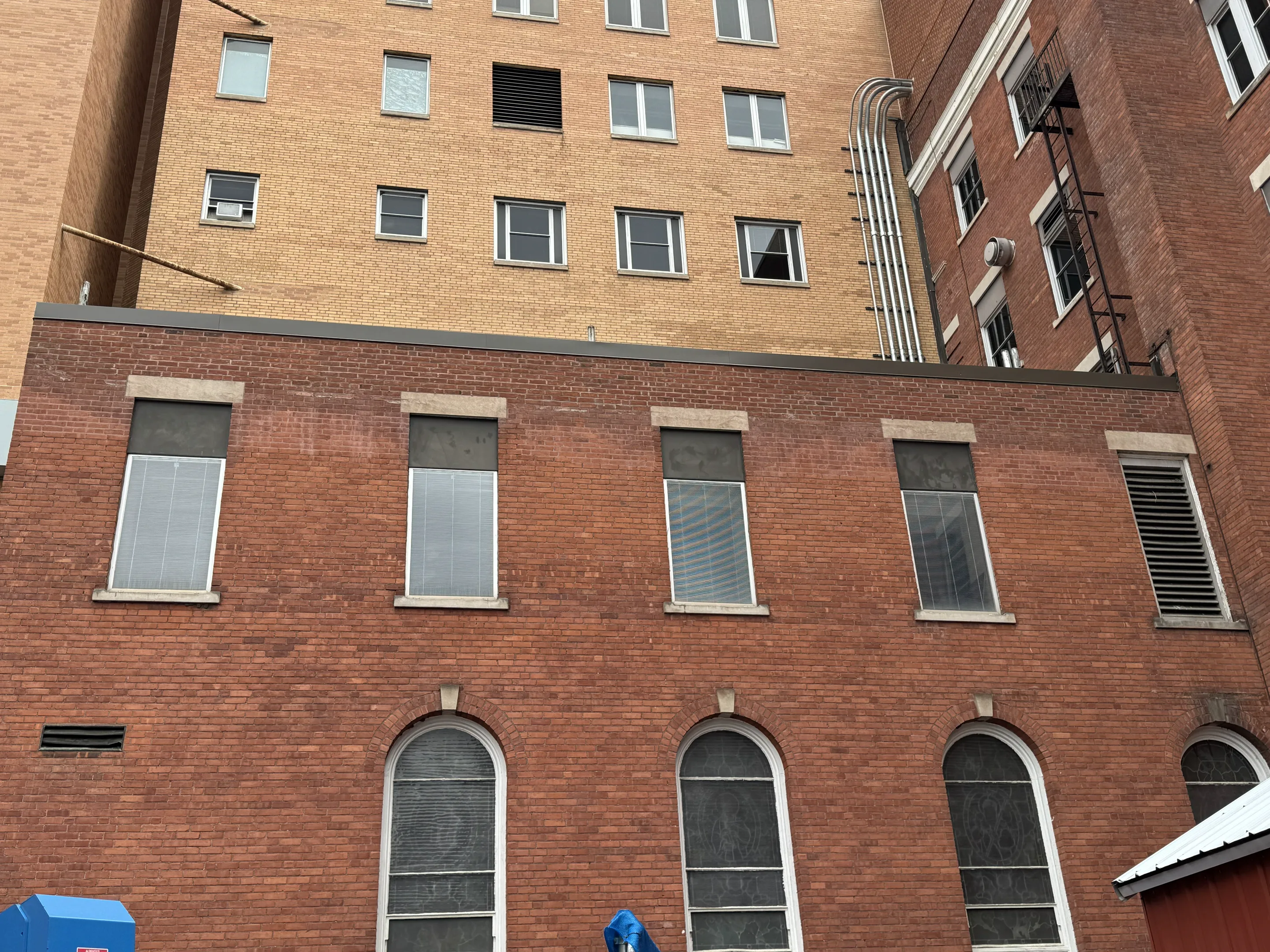
A parapet wall — the low masonry wall that extends above the roofline of a building — is one of the most structurally vulnerable elements on any older Connecticut building. It's exposed to weather on three sides simultaneously, and it sits right at the junction of the roof where water management is most critical. In Connecticut, where freeze-thaw cycles hit hard every winter, parapets deteriorate faster than almost any other masonry on a building.
Why Parapets Fail
The failure sequence is almost always the same. Mortar joints at the top of the parapet — or behind the coping stones that cap it — begin to open up. Water enters, works its way into the wall, and in winter it freezes and expands, pushing the masonry apart from the inside. By spring, mortar is sandy and loose, bricks are cracking or spalling, and coping stones may be visibly shifted. Left unaddressed, this cycle repeats and accelerates each year until sections of brick can physically detach from the wall — a serious safety hazard for anyone below.
Warning Signs Every Building Owner Should Know
- Coping stones that rock or have visible gaps underneath: The cap stones on top of the parapet should be locked down with mortar. Any movement means water is getting in.
- Efflorescence (white staining) on the facade below the roofline: This white mineral deposit is a reliable sign of active moisture moving through the masonry.
- Spalling or crumbling brick: Brick faces breaking away at the parapet level indicate freeze-thaw damage is well advanced.
- Rust staining around lintels or embedded steel: Rusting steel expands and cracks the surrounding masonry from the inside — a process called rust jacking.
- Visible gaps between the parapet and the roofing material: The flashing joint where the roof meets the parapet is a critical waterproofing point — any gap is an active leak.
What Proper Parapet Repair Looks Like
- Full assessment first: We inspect the parapet, coping stones, flashing condition, and the first several courses of brick below the roofline before quoting work. The visible damage is rarely the whole picture.
- Coping stone removal and reset: Shifted or undermined coping stones are lifted, cleaned, and re-set on a fresh mortar bed with properly tooled joints.
- Repointing deteriorated joints: Sandy or open mortar joints are raked out to proper depth and packed with fresh mortar matched to the existing masonry.
- Brick replacement where needed: Spalled or compromised bricks are removed and replaced with matching material, carefully toothed into the existing coursework.
- Flashing and waterproofing: The repair is not complete without addressing the roofline flashing and applying appropriate sealant at the critical joints.
A Real Connecticut Example
We completed a full parapet restoration at Saint Mary's Hospital in Waterbury, CT — a multi-story brick building where years of deferred maintenance had left the parapet with failing mortar, shifted coping stones, and active water infiltration at the roofline. The work involved repointing, coping stone resetting, selective brick replacement, and waterproofing across the full perimeter of the roofline. You can see the full photo documentation here: Parapet Repair | Saint Mary's Hospital.
The same failure pattern shows up on older commercial buildings, historic downtown storefronts, and older mixed-use buildings across Connecticut. The building type does not matter — the masonry physics are the same.
Don't Wait Until Bricks Are Falling
Parapet repairs caught early — when it's a repointing and coping reset job — cost a fraction of what a full parapet rebuild costs after years of neglect. If your building has a parapet showing any of the warning signs above, contact us for an assessment. Our commercial masonry team serves building owners throughout Fairfield, New Haven, Hartford, Middlesex and Litchfield Counties.
Is Your Parapet Showing Warning Signs?
We inspect and repair parapet walls on older Connecticut buildings. Contact us to schedule a site assessment.
Request a Parapet Assessment